

Sam Davidson is a speaker, writer and dreamer who tells the stories that need telling in order to motivate others to change the things that need changing. In 2006, he started CoolPeopleCare.org, a online resource for anyone who wants to make a difference. He is the author of New Day Revolution: How to Save the World in 24 Hours. He has helped countless nonprofits connect with Generation Y by offering workshops and keynote speeches designed to showcase the potential of social media to change the world for the better. To learn more about him (me), you really should visit his Web site, SamDavidson.net.
Showing posts with label book reviews. Show all posts
Showing posts with label book reviews. Show all posts
Tuesday, March 10, 2009
1 comments
 Short review: 80 words
Peter Shankman's book does for events and publicity what Seth Godin's books do for brands and companies. At the end of the day, no matter what you're working on, it better be remarkable to get people talking. And, you'll never have a shot at remarkable if you don't dream big, boldly try new things, and put it all on the line. Shankman's personal tales make you think that maybe you can pull off the extraordinary and generate some serious buzz.
How to read it:
I've been subscribing for a while now to Shankman's Help a Reporter Out emails, which has helped me (and CoolPeopleCare) land a little bit of publicity. So, I figured – before even cracking the cover – that he book would be filled with good ideas by way of Shankman's own examples.
I was right.
The tone is conversational, motivational, challenging and insightful. The book is easy to read and is very good about not repeating the same thing again and again. So, you'll want to keep reading just to see what Shankman's firm, The Geek Factory, might pull off next and what kind of buzz they might create.
The stories range widely in terms of scope and budget, time and tools. There's the story about building a giant yarn bus for a small knitting store, the one about having his own birthday party sponsored, and how it is that Peter became a serious skydiver. And don't forget about the time they nearly shut down the Internet.
But best of all are Peter's reminders that you don't need a big team, a big budget or a big client to really get things done in the PR world. You just need something worth talking about. And you need to be creative. And you need to be on your toes. Do that, and be ready to be excited with the outcome.
The book is helpful, particularly because Peter calls attention to his 'rules' – his time-tested mantras for creating ideas that matter in this world. And, each chapter summarizes the major points contained therein so that you can easily reference them later.
Bottom line: the book is good, whether you run your own big-time firm, or you're a laid-back customer service rep.
366-Word Book Review: Can We Do That?!
Short review: 80 wordsPeter Shankman's book does for events and publicity what Seth Godin's books do for brands and companies. At the end of the day, no matter what you're working on, it better be remarkable to get people talking. And, you'll never have a shot at remarkable if you don't dream big, boldly try new things, and put it all on the line. Shankman's personal tales make you think that maybe you can pull off the extraordinary and generate some serious buzz.
How to read it:
- Whenever you need creativity to strike
- When it's time to launch something new
- When you're planning the next event
- Immediately
I've been subscribing for a while now to Shankman's Help a Reporter Out emails, which has helped me (and CoolPeopleCare) land a little bit of publicity. So, I figured – before even cracking the cover – that he book would be filled with good ideas by way of Shankman's own examples.
I was right.
The tone is conversational, motivational, challenging and insightful. The book is easy to read and is very good about not repeating the same thing again and again. So, you'll want to keep reading just to see what Shankman's firm, The Geek Factory, might pull off next and what kind of buzz they might create.
The stories range widely in terms of scope and budget, time and tools. There's the story about building a giant yarn bus for a small knitting store, the one about having his own birthday party sponsored, and how it is that Peter became a serious skydiver. And don't forget about the time they nearly shut down the Internet.
But best of all are Peter's reminders that you don't need a big team, a big budget or a big client to really get things done in the PR world. You just need something worth talking about. And you need to be creative. And you need to be on your toes. Do that, and be ready to be excited with the outcome.
The book is helpful, particularly because Peter calls attention to his 'rules' – his time-tested mantras for creating ideas that matter in this world. And, each chapter summarizes the major points contained therein so that you can easily reference them later.
Bottom line: the book is good, whether you run your own big-time firm, or you're a laid-back customer service rep.

Thursday, February 19, 2009
0
comments
 Short review: 64 words
A quick read, Bringing Your Business to Life is full of practical advice, concrete examples and reflective ideas for the entrepreneur. It's a primer on creating a venture that is not just successful, but meaningful for the entrepreneur on a personal and societal level. Written from a Christian perspective, it should appeal to anyone seeking to add moral or communal value to a business.
How to read it:
I bought this book after hearing the authors present on its theme. Both Jeffrey Cornwall and Michael Naughton are skilled professors in their respective fields (business and theology) and the book is the product of their teaching a course together.
The combination of both minds knits together this worthy read, which calls attention to the four cardinal virtues (prudence, justice, courage and temperance) as they relate to the entrepreneur personally and professionally. It's a reminder that it's simply not enough to be successful – one must also be good (as defined by the four virtues).
And to be good, the entrepreneur must remember that business is never just business. A new or growing venture is always a part of our lives, and our lives also contain things like our families, our communities, our religious expressions and our free time. When all the components of our life are not held in proper balance, we truly miss a chance at being good.
While the book is short on 'self-help' – at least in the form of checklists, reminders and metrics – it is rich with examples of companies that have achieved financial and ethical success. It calls to the reader's attention businesses in a variety of sectors that treat employees well, produce quality goods and services, and ultimately set a standard for just how good an entrepreneur and his or her business can be.
I made note of several key quotes, some of which I'll share to end this review:
Other books reviewed in 2009:
370-Word Book Review: Bringing Your Business to Life
Short review: 64 wordsA quick read, Bringing Your Business to Life is full of practical advice, concrete examples and reflective ideas for the entrepreneur. It's a primer on creating a venture that is not just successful, but meaningful for the entrepreneur on a personal and societal level. Written from a Christian perspective, it should appeal to anyone seeking to add moral or communal value to a business.
How to read it:
- In one sitting (or two)
- With a highlighter or pen to make notes
- Yearly, or every time you launch something new
I bought this book after hearing the authors present on its theme. Both Jeffrey Cornwall and Michael Naughton are skilled professors in their respective fields (business and theology) and the book is the product of their teaching a course together.
The combination of both minds knits together this worthy read, which calls attention to the four cardinal virtues (prudence, justice, courage and temperance) as they relate to the entrepreneur personally and professionally. It's a reminder that it's simply not enough to be successful – one must also be good (as defined by the four virtues).
And to be good, the entrepreneur must remember that business is never just business. A new or growing venture is always a part of our lives, and our lives also contain things like our families, our communities, our religious expressions and our free time. When all the components of our life are not held in proper balance, we truly miss a chance at being good.
While the book is short on 'self-help' – at least in the form of checklists, reminders and metrics – it is rich with examples of companies that have achieved financial and ethical success. It calls to the reader's attention businesses in a variety of sectors that treat employees well, produce quality goods and services, and ultimately set a standard for just how good an entrepreneur and his or her business can be.
I made note of several key quotes, some of which I'll share to end this review:
Entrepreneurs are a powerful force in our society because they create trends, break molds and cause significant changes within society. (page 29)
If businesses fail to act as agents of justice, it most often defaults to government agencies to act. (page 101)
Temperance helps us see the importance of saying no. Our nos clarify the yeses of our commitments. (page 147)---
Other books reviewed in 2009:
Wednesday, January 28, 2009
0
comments
 Short Review: 87 words
We miscalculate life's events. We know what risk is and when it pops up, but we often think something is too risky when it isn't or not that risky when it is. As a result, we live mediocre lives and never venture enough out into the proper extremes, which is where the big money is to be made. It's not always our fault, but is the product of our humanness, our education, and our surroundings. But, if you read this book, you'll no longer have those excuses.
How to read it:
The Black Swan is the third book I've read this year (for a complete list, check out my right sidebar). And it will probably be the meatiest tome I take on for 2009.
I picked it up after two friends recommended it, people who live two very different lives. So, I expected a business-type book with universal appeal, complete with numbered reminders and concise and memorable theories. The Black Swan offers none of the above.
What Nassim Nicholas Taleb does put forth, however, is a deeply profound thesis: Black Swan events dominate our lives, and those who make it big understand this and leverage themselves accordingly. The theory is based on the idea that up until a certain point, humans had only ever seen white swans. But the moment that black swans were discovered, their entire worldview was sent spinning. (For a more concise review and the financial implications of Black Swans, read this Forbes article.)
It took me a while to get through Taleb's work, mainly because it's full of history and theory and chronicles philosophers and scientists who have thought every which way about Black Swans. But, if you can wade through all the details, you'll be able to find nuggets, and great ones at that.
Every so often, Black Swan events occur that leave all of us reeling. These events are unexpected, shocking, and only seem predictable after the fact (9/11 and World War One are Taleb's classic examples). This happens in any industry time and time again.
Taleb then showcases that two worlds exist: Mediocristan, where citizens take little risk and try to play it safe, working in unscalable professions in order to maintain a comfortable status quo; and Extremistan, where the foundations of society are often shaken, and those who were ready to capitalize on that change do. His advice is that we live in Extremistan when the greatest possible positive outcome is worth the risk, but that we also can't overestimate the greatest possible negative effects of what Mediocristan can bring.
This isn't an advice kind of book, or a book about making lots of money. It's an eye-opening examination of how we live life and operate in our respective worlds. Fortunately, Taleb does offer some practical wisdom for ways to live well in Extremistan. I'll offer one to you now:
686-Word Book Review: The Black Swan
Short Review: 87 wordsWe miscalculate life's events. We know what risk is and when it pops up, but we often think something is too risky when it isn't or not that risky when it is. As a result, we live mediocre lives and never venture enough out into the proper extremes, which is where the big money is to be made. It's not always our fault, but is the product of our humanness, our education, and our surroundings. But, if you read this book, you'll no longer have those excuses.
How to read it:
- Slowly.
- Twice.
- With caffeine nearby.
The Black Swan is the third book I've read this year (for a complete list, check out my right sidebar). And it will probably be the meatiest tome I take on for 2009.
I picked it up after two friends recommended it, people who live two very different lives. So, I expected a business-type book with universal appeal, complete with numbered reminders and concise and memorable theories. The Black Swan offers none of the above.
What Nassim Nicholas Taleb does put forth, however, is a deeply profound thesis: Black Swan events dominate our lives, and those who make it big understand this and leverage themselves accordingly. The theory is based on the idea that up until a certain point, humans had only ever seen white swans. But the moment that black swans were discovered, their entire worldview was sent spinning. (For a more concise review and the financial implications of Black Swans, read this Forbes article.)
It took me a while to get through Taleb's work, mainly because it's full of history and theory and chronicles philosophers and scientists who have thought every which way about Black Swans. But, if you can wade through all the details, you'll be able to find nuggets, and great ones at that.
Every so often, Black Swan events occur that leave all of us reeling. These events are unexpected, shocking, and only seem predictable after the fact (9/11 and World War One are Taleb's classic examples). This happens in any industry time and time again.
Taleb then showcases that two worlds exist: Mediocristan, where citizens take little risk and try to play it safe, working in unscalable professions in order to maintain a comfortable status quo; and Extremistan, where the foundations of society are often shaken, and those who were ready to capitalize on that change do. His advice is that we live in Extremistan when the greatest possible positive outcome is worth the risk, but that we also can't overestimate the greatest possible negative effects of what Mediocristan can bring.
This isn't an advice kind of book, or a book about making lots of money. It's an eye-opening examination of how we live life and operate in our respective worlds. Fortunately, Taleb does offer some practical wisdom for ways to live well in Extremistan. I'll offer one to you now:
Seize opportunity, or anything that looks like opportunity. They are rare, much rarer than you think. Remember that positive Black Swans have a necessary first step: you need to be exposed to them…. Work hard, not in grunt work, but in chasing such opportunities and maximizing exposure to them…. Go to parties. If you're a scientist, you will chance upon a remark that might spark new research. And if you are autistic, send your associates to these events.And, to conclude, I offer a first – a guest review from my friend Bier, who recommended the book to me:
I love books that destroy assumptions and alter my daily thought patterns. A hardy ambassador for critical thought, The Black Swan does both well enough to be called philosophy, but it's also sufficiently technical to mail to a stats professor for his take. (I did.) Meanwhile, the proportion of my thoughts committed to potential magnitude has spiked, at the expense of probability analysis. A summary: You really don't know jack about why or how often - and neither do the "experts" - so think more about what if and how much. When you do, you save yourself from the very worst and widen the crack for the very best. The rest is all manageable.
Wednesday, January 14, 2009
2
comments
 Short review: 40 words
Michael Pollen's book is one that will help you figure out why what you're eating isn't miracle food and what you should be eating instead. It's not a guide to weight loss, but it is a guide to eating better.
How to read it:
The first half of the book is academic. Very academic. It's full of citations and quotes from papers and research that I'd never read. Thankfully, Pollen distills it down for us non-nutritionists, non-dieticians and non-doctors. The point of his 81-page diatribe? The food industry has boiled eating down to what can be called "nutritionism" which has created harmful effects for omnivores everywhere.
We've all seen food in the supermarket that promises to lower our cholesterol, make us healthier or be a cure-all for what ails us. Pollen points out that the above features aren't just myths – they're nearly based on junk science that divorces food from culture, thereby making us unhealthier than ever.
So what's the solution? Pollen offers a comprehensive one in the second half of his book. And, he keeps it simple. He offers the 'why' behind such maxims as, "Shop the peripheries of the supermarket and stay out of the middle," "Eat mostly plants, especially leaves," and "Do all your eating at a table."
Following all of Pollen's advice will make you a healthier and happier person, I'm sure. But it will also make you realize the intricate relationship that we should be having with what we eat. Because food has been a social and cultural experience on a variety of levels, it can't be broken down into simple nutrients and calories. And this is precisely why food must be defended.
274-Word Book Review: In Defense of Food
Short review: 40 wordsMichael Pollen's book is one that will help you figure out why what you're eating isn't miracle food and what you should be eating instead. It's not a guide to weight loss, but it is a guide to eating better.
How to read it:
- Skim the first half, but read every word of the second.
- Check it out from the library and write down all of his rules in part two.
- Invite your friends over for dinner to talk about it.
The first half of the book is academic. Very academic. It's full of citations and quotes from papers and research that I'd never read. Thankfully, Pollen distills it down for us non-nutritionists, non-dieticians and non-doctors. The point of his 81-page diatribe? The food industry has boiled eating down to what can be called "nutritionism" which has created harmful effects for omnivores everywhere.
We've all seen food in the supermarket that promises to lower our cholesterol, make us healthier or be a cure-all for what ails us. Pollen points out that the above features aren't just myths – they're nearly based on junk science that divorces food from culture, thereby making us unhealthier than ever.
So what's the solution? Pollen offers a comprehensive one in the second half of his book. And, he keeps it simple. He offers the 'why' behind such maxims as, "Shop the peripheries of the supermarket and stay out of the middle," "Eat mostly plants, especially leaves," and "Do all your eating at a table."
Following all of Pollen's advice will make you a healthier and happier person, I'm sure. But it will also make you realize the intricate relationship that we should be having with what we eat. Because food has been a social and cultural experience on a variety of levels, it can't be broken down into simple nutrients and calories. And this is precisely why food must be defended.
Tuesday, December 02, 2008
3
comments
 I flew through the advanced copy of Creating Magic: 10 Common Sense Leadership Strategies from a Life at Disney, which is a practical leadership guide for anyone looking to make his or her mark in the world of business. In fact, after reading it, I nearly wanted to get off my entrepreneurship ride and find myself inside of some large multinational corporation, just so I could have a chance to implement some of Lee Cockerell's suggestions. They're that good.
But the best part is that you don't have to be in middle or upper management to try out some of Lee's lessons. You can be your own boss, working an entry-level gig or climbing any and every ladder and still have a chance to better your own leadership skills.
The book is thick – well over 250 pages – and doesn't have slick graphics, charts or pull quotes that you're used to in most business books. Thus, the book itself is a commitment, which sort of mirrors leadership, if you think about it. But, it's worth getting through, even if a few suggestions seem redundant.
What makes the book a compelling read is when Lee draws on his own experience. He used to work at Marriott (as did I) and he shares tales of success and failure in his early years. And while I could picture myself in lobbies, kitchens and on guest floors whenever he described an instance of learning and leadership, you don't have to be a hospitality vet to be engaged by his story. After all, he spent the better part of his career with Disney, and most of us have been to the Magic Kingdom, or have at least seen "Aladdin" or "The Little Mermaid."
You'll understand why places like Disney are case studies in remarkability when you read Creating Magic. For a company that big to be that good for that long, great leaders have to be at the helm of every aspect of the operation. And, no matter which helm of which operation you may find yourself, Lee has some advice for you.
So, whether you’re running a nonprofit or a bank, a classroom or a marketing agency, Lee's reminders – while not ultimately revolutionary at every turn – are important keys for every leader to have in his or her pocket. (These are called 'common sense' strategies, after all.) And that's why the book was so enduring for me – I can always use the reminder that the best practice is often the most obvious or even the easiest.
Because if leadership is about anything, it's about consistent excellence.
Book Review: Creating Magic by Lee Cockerell
I flew through the advanced copy of Creating Magic: 10 Common Sense Leadership Strategies from a Life at Disney, which is a practical leadership guide for anyone looking to make his or her mark in the world of business. In fact, after reading it, I nearly wanted to get off my entrepreneurship ride and find myself inside of some large multinational corporation, just so I could have a chance to implement some of Lee Cockerell's suggestions. They're that good.But the best part is that you don't have to be in middle or upper management to try out some of Lee's lessons. You can be your own boss, working an entry-level gig or climbing any and every ladder and still have a chance to better your own leadership skills.
The book is thick – well over 250 pages – and doesn't have slick graphics, charts or pull quotes that you're used to in most business books. Thus, the book itself is a commitment, which sort of mirrors leadership, if you think about it. But, it's worth getting through, even if a few suggestions seem redundant.
What makes the book a compelling read is when Lee draws on his own experience. He used to work at Marriott (as did I) and he shares tales of success and failure in his early years. And while I could picture myself in lobbies, kitchens and on guest floors whenever he described an instance of learning and leadership, you don't have to be a hospitality vet to be engaged by his story. After all, he spent the better part of his career with Disney, and most of us have been to the Magic Kingdom, or have at least seen "Aladdin" or "The Little Mermaid."
You'll understand why places like Disney are case studies in remarkability when you read Creating Magic. For a company that big to be that good for that long, great leaders have to be at the helm of every aspect of the operation. And, no matter which helm of which operation you may find yourself, Lee has some advice for you.
So, whether you’re running a nonprofit or a bank, a classroom or a marketing agency, Lee's reminders – while not ultimately revolutionary at every turn – are important keys for every leader to have in his or her pocket. (These are called 'common sense' strategies, after all.) And that's why the book was so enduring for me – I can always use the reminder that the best practice is often the most obvious or even the easiest.
Because if leadership is about anything, it's about consistent excellence.
Friday, February 08, 2008
8
comments
 I had been aware of Kalle Lasn's Culture Jam for a while. I grabbed it recently at a local used book store, but left it sitting on my shelf until last week. His manifesto for a new way to understand consumerism is refreshing, convicting, and challenging.
I enjoy Lasn's passion, which is evident on each page of the book. He clearly has a desire to show Americans a better way for our county, economy and neighborhoods when he shares swaths of data and countless ideas for ways to reverse "America's Consumer Binge."
His thesis is simple:
And that's just in the introduction. The rest of the text is a walk down the corridors of our capitalist structures, as Lasn pulls back the veil that so easily shrouds the reality of the system, lulling us to sleep while we carry on, overburden ourselves with debt, and hope the next product we see advertised will fix everything.
While it's easy to think he goes overboard with some suggestions, and while I'd like to think what he's asking is too over-the-top and completely unrealistic, if I'm honest with myself, I find that I only accuse him of such because I find it so difficult to loose myself from the chains of my own lust after the designer lifestyle.
But when I realized that, I knew I must change. That's the beauty of Lasn's book. Don't read it if you're not willing to consider his argument, and then be confronted with the reality of your own house and closet.
Here are some of Lasn's other great quotes:
But we know better.
I Read a Book: Culture Jam
I had been aware of Kalle Lasn's Culture Jam for a while. I grabbed it recently at a local used book store, but left it sitting on my shelf until last week. His manifesto for a new way to understand consumerism is refreshing, convicting, and challenging.I enjoy Lasn's passion, which is evident on each page of the book. He clearly has a desire to show Americans a better way for our county, economy and neighborhoods when he shares swaths of data and countless ideas for ways to reverse "America's Consumer Binge."
His thesis is simple:
America is no longer a country. It's a multitrillion-dollar brand.Because of this, we "now live designer lives - sleep, eat, sit in a car, work, shop, watch TV, sleep again. I doubt there's more than a handful of free, spontaneous minutes anywhere in that cycle."
And that's just in the introduction. The rest of the text is a walk down the corridors of our capitalist structures, as Lasn pulls back the veil that so easily shrouds the reality of the system, lulling us to sleep while we carry on, overburden ourselves with debt, and hope the next product we see advertised will fix everything.
While it's easy to think he goes overboard with some suggestions, and while I'd like to think what he's asking is too over-the-top and completely unrealistic, if I'm honest with myself, I find that I only accuse him of such because I find it so difficult to loose myself from the chains of my own lust after the designer lifestyle.
But when I realized that, I knew I must change. That's the beauty of Lasn's book. Don't read it if you're not willing to consider his argument, and then be confronted with the reality of your own house and closet.
Here are some of Lasn's other great quotes:
The pursuit of freedom is what revolutions are all about.Even as I read through the above to type them in, I once again found myself challenged. And perhaps that's the best feature of Lasn's work - it's a timeless affront to the powerful and fully-funded messages we receive daily that teach us it's easier to stay put, shop, and leave everything alone.
The generations alive today - who cannot recognize an edible mushroom in the forest of build a fire without matches - are the first to have had their lives shaped almost entirely by the electronic mass media environment.
Fear breeds insecurity - and then consumer culture offers us a variety of ways to buy our way back to security.
The first time we saw a starving child on a late-night TV ad, we were appalled. Maybe we sent money. As these images became more familiar, though, our compassion evaporated. Eventually, these ads started to repulse us. Now we never want to see another starving child again. Our sensitivity to violence has been eroded by the same process of attrition.
Lack of diversity leads to inefficiency and failure. The loss of a language, tradition or heritage - or the foregoing of one good idea - is as big a loss to future generations as a biological species going extinct.
We, the people, have lost control. Corporations, these legal fictions that we ourselves created two centuries ago, now have more rights, freedoms and powers than we do. And we accept this as the normal state of affairs. We go to corporations on our knees. Please do the right thing, we plead. Please don't cut down any more ancient forests. Please don't pollute any more lakes and rivers (but please don't move your factories and jobs offshore either). Please don't use pornographic images to sell fashion to my kids. Please don't play governments off against each other to get a better deal. We've spent so much time bowed down in deference, we've forgotten how to stand up straight.
The GDP fails to assign any value at all to unpaid or volunteer work.
The GDP measures "goods" but not "bads." [That is] like driving your car without a gas gauge.
We sink billions into mutual funds and retirement plans, assuming these to be secure, broad-based, blue-chip investments. But what's in these funds? Just as with hot dogs, you don't really want to know. Some of your money may be bolstering the economies of dubious, often atrocious, even genocidal regimes.
[There has been] a devolution in the state of living: from "being" to "having" and then from "having" to "appearing to have."
On the American campus - the great waiting room, the traditional place for radical demonstrations to rage - not much is happening. There's no real rush to finish a degree because what lies on the other side but debt, pavement pounding and the potential shame of boomeranging back home? [Some say] "Life sucks." Okay. So fix a small corner of it. When so much is at stake, how can you be so complacent?
What if each shareholder was deemed personally responsible and liable for collateral damage to bystanders or harms to the environment? Why shouldn't it be so? If you're a shareholder, a part-owner of a corporation, and you reap the rewards when the going is good, why shouldn't you be held responsible for that company when it becomes criminally liable?
The fossil fuel-based automobile industry is being subsidized by unborn generations to the tunes of hundreds of billions of dollars every year.
For most of us the economy remains a mysterious abstract system. As with our microwave over, we don't know hoe it works and we don't really want to know. We just keep pushing buttons and hot dinners keep coming out.
In all revolutions, the agents of change - usually a small core of fired-up individuals - reach a personal point of reckoning where to do nothing becomes harder than to step forward.
But we know better.
Tuesday, January 29, 2008
0
comments
 Yes, it's a question many folks are asking. But it's also the title of a book I just finished.
Po Bronson's work is long, but it might be worth your while if you're looking for stories about individuals who have dared to answer the title question. The stories are all engaging, and many seem ordinary. But in their ordinariness is where many of us can find direction.
Bronson interview countless people while working on this book. He traveled and listened to stories, some of them heartbreaking, all in an attempt to show the reader how many paths unfolded for people who own catfish farms, work as lawyers, and teach school.
Even though some of these quotes are ripped from their context, these are worth sharing as they got me thinking:
What Should I Do With My Life?
Yes, it's a question many folks are asking. But it's also the title of a book I just finished.Po Bronson's work is long, but it might be worth your while if you're looking for stories about individuals who have dared to answer the title question. The stories are all engaging, and many seem ordinary. But in their ordinariness is where many of us can find direction.
Bronson interview countless people while working on this book. He traveled and listened to stories, some of them heartbreaking, all in an attempt to show the reader how many paths unfolded for people who own catfish farms, work as lawyers, and teach school.
Even though some of these quotes are ripped from their context, these are worth sharing as they got me thinking:
Many people use the dream-job-or-nothing goal as a way of ensuring their dreams are never challenged by reality - by hoping for too much, they can preserve their dream as a perfect fantasy. (page 13)Overall, this book is a bit tedious in its description and ultimately offers little in the way of resolution. But that's what also gives the reader a sense of community. Pick up this book if you're looking to listen to others about how they landed where they are.
Passion is infectious - so few people have it for their work that when you do glimpse it, it makes an indelible impression. (page 15)
We live in a rich country, so rich that we're blessed with the ultimate privilege: to be true to our individual nature. Our economy is so vast that we don't have to grind it out forever at jobs we hate. For the most part, we get to choose. And so a status system has evolved that values being unique and true even more than it values being financially successful. (page 20)
We all have passions if we choose to see them. But we have to look backward even more than forward, and we have to chase away our preconceptions of what we think our passion is supposed to be, or not supposed to be. (page 37)
People have this stupid fantasy that if you're the creator, or the inventor, of the artist, you hand over your creation to businessmen and cash the royalty checks. That's a fantasy. It's irresponsible to their gift. If you have a gift, you should take care of it. (page 42)
The same goes for figuring out your place in life. It's not a puzzle that can be figured out on paper. You have to try something, see if it works, and learn from it. (page 46)
The conclusion that brain candy is not enough is probably the most threatening to our generation's belief system. In this belief system, the world is a battle between the Boring and the Stimulating. We channel-surf through jobs and relationships, pushing the button at the first hint of slowing down. Like Lori, we've rejected the compromises of our parents' generation, who sought safety and security. Anyone who comes along and murmurs that "stimulation is not everything" is quickly tuned out, because we don't want to hear it anymore. (page 47)
The relevant question is not what you will do, but who you will become. (page 48)
We can worship saints, but we can't emulate them. I would rather hear how the weak of will end up doing some good. (page 92)
For all those who were morally troubled by their work, it surprised me how few ever considered simply switching sides. (page 95)
The hardest thing about doing the right thing for yourself is you usually have to do it alone. (page 96)
If you need to summon the will to make a change, don't debate ethics. Get personal. If you don't believe in the integrity of your profession, you can debate the ethics of it forever and never do anything. But if you define the personal toll it's taking, it hits a lot closer to home. (page 102)
If I was financially independent, I would never have to take work I didn't want to do. But to become financially independent, I had to take work I didn't want to do. (page 113)
Failure's hard, but success is far more dangerous. If you're successful at the wrong thing, the mix of praise and money and opportunity can lock you in forever. It is so, so much harder to leave a good thing. (page 114)
If you have a passion then making your dream come true is so easy compared to the hard part. (page 144)
People have a natural tendency not to work on problems where they can't make a difference. (page 162)
Passion is really a complex organic chemistry between an individual and her job that isn't replicable or mass-producible. (page 174)
Intensity is external; passion invokes something inside you. It's a call-and-response with your soul. It's not just adrenaline. (page 175)
I'm not saying the community is everything, but it makes success possible. (page 236)
Don't doubt your desire because it comes to you as a whisper. (page 268)
The things we really want to do are usually the ones that scare us the most. The things you'll not feel conflicted about are the choices that leave no one hurt. (page 268)
You want to know where your fears are hiding? Tell me what you know about yourself. Tell me what you can't live without. (page 282)
Many of our fears and misconceptions about our careers stem from our fears and misconceptions about being a parent. (page 307)
But I'd rather help than watch. I'd rather have a heart than have a mind. I'd rather expose too much than too little. I'd rather say hello to strangers than be afraid of them. I would rather know all this about myself than have more money than I need. I'd rather have something to love than a way to impress you. (page 360)
Finding what we should do is one of life's great dramas. It can be an endless process of discovery, one to be appreciated and respected for its difficulty. (page 362)
Passion is rooted in deeply felt experiences, which can happen anywhere. (page 365)
Wednesday, December 12, 2007
2
comments
Two Books You Should Read
I picked up Mark Albion's book, True to Yourself after I saw it displayed near mine at the Net Impact bookstore at last month's conference.
I read it in two days.
I bought Randy Komisar's The Monk and the Riddle a few months ago at a used bookstore. I took it with me to Madison when I went to talk about turning your passion into your profession.
I read it in two days.
Because when a book is good, you want to get to the end to see how it all turns out. Some people do this with suspenseful novels. I do this with business-related books that are packed with information, ideas and stories that remind us it's not how much we make but how we're making it that really counts.
Albion's book comes out of the world of social enterprise. He showcases how founders, leaders and employees of companies can make a difference while they make products and profits. With a keen understanding of what values-based businesses look like and how they operate, Albion shows the reader not only how they can start one, but also how they can make sure it remains focused on what's important while growing and transitioning.
If you want your business to mean something, read this book.
Komisar's work is equally as valuable to the passion-based entrepreneur. Through a compelling story of one man's attempt to start, grow and sell a Web-based company, Komisar walks the reader through the steps one can take to make sure what you're doing is valuable. But, thankfully, he shows that value is not just in a balance sheet, but in a balanced life.
 Komisar contrasts the Deferred Life Plan with the Whole Life Plan. In the former, you do what you have to now in order to do what you want later. In the latter, you integrate what you want to do with what you need to do. After all, if you're working for 40 years in order to do what you love when you retire, you might not make it.
Both books reminded me that now is the time to make a difference, have an impact and change the world. Both reads also take into account the realism that takes shape in the form of budgets, deadlines and other real-world parameters that too often become excuses.
But, if we are to be happy, and not just rich, if we are to be whole, and not just decorated, if we are to be meaningful, and not just admired, we must take Komisar's words to heart:
I read it in two days.
I bought Randy Komisar's The Monk and the Riddle a few months ago at a used bookstore. I took it with me to Madison when I went to talk about turning your passion into your profession.
I read it in two days.
Because when a book is good, you want to get to the end to see how it all turns out. Some people do this with suspenseful novels. I do this with business-related books that are packed with information, ideas and stories that remind us it's not how much we make but how we're making it that really counts.
Albion's book comes out of the world of social enterprise. He showcases how founders, leaders and employees of companies can make a difference while they make products and profits. With a keen understanding of what values-based businesses look like and how they operate, Albion shows the reader not only how they can start one, but also how they can make sure it remains focused on what's important while growing and transitioning.
If you want your business to mean something, read this book.
Komisar's work is equally as valuable to the passion-based entrepreneur. Through a compelling story of one man's attempt to start, grow and sell a Web-based company, Komisar walks the reader through the steps one can take to make sure what you're doing is valuable. But, thankfully, he shows that value is not just in a balance sheet, but in a balanced life.
Komisar contrasts the Deferred Life Plan with the Whole Life Plan. In the former, you do what you have to now in order to do what you want later. In the latter, you integrate what you want to do with what you need to do. After all, if you're working for 40 years in order to do what you love when you retire, you might not make it.Both books reminded me that now is the time to make a difference, have an impact and change the world. Both reads also take into account the realism that takes shape in the form of budgets, deadlines and other real-world parameters that too often become excuses.
But, if we are to be happy, and not just rich, if we are to be whole, and not just decorated, if we are to be meaningful, and not just admired, we must take Komisar's words to heart:
Only the Whole Life Plan leads to personal success. It has the greatest chance of providing satisfaction and contentment that one can take to the grave, tomorrow. In the Deferred Life Plan there will always be another prize to covet, another distraction, a new hunger to sate. You will forever come up short.Do something that matters.
Work hard, work passionately, but apply your most precious asset – time – to what is most meaningful to you. What are you willing to do for the rest of your life? does not mean, literally, what will you do for the rest of your life? That question would be absurd, given the inevitability of change. No, what the question really asks is, if your life were to end suddenly and unexpectedly tomorrow, would you be able to say you've been doing what you truly care about today? What would you be willing to do for the rest of your life? What would it take to do it right now?
Monday, October 08, 2007
0
comments
 While attending the YP Summit last month, I received a free copy of Rebecca Ryan's book, Live First, Work Second: Getting Inside the Head of the Next Generation. I enjoy Ryan's thoughts on the next generation, so I would have bought it even if I weren't given it for free.
If you're familiar with Ryan and her work with Next Generation Consulting, the book isn't really a big surprise. But, if you're looking for ways to make your city, company or community attract and retail young talent, the book is a welcome punch in the mouth.
Live First is a compilation of Ryan and NGC's work over the years. They've spoken to countless young people and have consulted with organizations and communities of nearly any and every size. So, they know what they're talking about.
In addition to being informative and insightful, this book is full of examples, suggestions and good ideas to make your area appealing to the next generation of workers, patrons, families and attendees. Ryan cites ideas that have worked well in many cities, but offers comprehensive frameworks that have you thinking that your town may just be cool enough to pull off something similar.
The biggest distinction in the book: for many people, there's no such thing as a work/life balance. That's because it's become a life/work balance. And, if your business doesn't realize this, your youngest workers will be heading for the exits before lunch. It also means that if you're a community leader, you've got to build buildings, design communities and create opportunities that allow the next generation to do more than work, or else they'll fill a UHaul in search of a place that does.
The book is short, but well written. It reads like Ryan speaks – a bit irreverent, but always engaging. An afternoon spent with this book will position you to take an active stance in embracing tomorrow, no matter what age you are.
Book Review: Live First, Work Second
While attending the YP Summit last month, I received a free copy of Rebecca Ryan's book, Live First, Work Second: Getting Inside the Head of the Next Generation. I enjoy Ryan's thoughts on the next generation, so I would have bought it even if I weren't given it for free.If you're familiar with Ryan and her work with Next Generation Consulting, the book isn't really a big surprise. But, if you're looking for ways to make your city, company or community attract and retail young talent, the book is a welcome punch in the mouth.
Live First is a compilation of Ryan and NGC's work over the years. They've spoken to countless young people and have consulted with organizations and communities of nearly any and every size. So, they know what they're talking about.
In addition to being informative and insightful, this book is full of examples, suggestions and good ideas to make your area appealing to the next generation of workers, patrons, families and attendees. Ryan cites ideas that have worked well in many cities, but offers comprehensive frameworks that have you thinking that your town may just be cool enough to pull off something similar.
The biggest distinction in the book: for many people, there's no such thing as a work/life balance. That's because it's become a life/work balance. And, if your business doesn't realize this, your youngest workers will be heading for the exits before lunch. It also means that if you're a community leader, you've got to build buildings, design communities and create opportunities that allow the next generation to do more than work, or else they'll fill a UHaul in search of a place that does.
The book is short, but well written. It reads like Ryan speaks – a bit irreverent, but always engaging. An afternoon spent with this book will position you to take an active stance in embracing tomorrow, no matter what age you are.
Sunday, August 19, 2007
0
comments
 It's been a while since I've read an entire book in just one day. That's mainly due the fact that rarely do I have a day devoted solely to reading. But, when coming back from Orlando last Thursday, I had a bus ride, time in the airport, a plane ride, and some time at a coffee shop to fly through Freakonomics.
I'm a late adapter on this book. It's been out for a while - so long in fact, that the version I picked up before my trip was the revised and expanded edition.
There's been a lot written about this book. Some people don't agree with these guys' interpretation of the stats. Some folks think it's too sensationalist. Some people don't quite understand why what they talk about even matters. But for me, I think this is a remarkable read for three reasons:
A Remarkable Read: Freakonomics
It's been a while since I've read an entire book in just one day. That's mainly due the fact that rarely do I have a day devoted solely to reading. But, when coming back from Orlando last Thursday, I had a bus ride, time in the airport, a plane ride, and some time at a coffee shop to fly through Freakonomics.I'm a late adapter on this book. It's been out for a while - so long in fact, that the version I picked up before my trip was the revised and expanded edition.
There's been a lot written about this book. Some people don't agree with these guys' interpretation of the stats. Some folks think it's too sensationalist. Some people don't quite understand why what they talk about even matters. But for me, I think this is a remarkable read for three reasons:
- It's readable. The Tipping Point is as equally a fascinating look at numbers, stats, and trends, but the Freakonomics boys really know how to write. Granted, Dubner is a professional journalist, and is therefore a writer by trade, but this book easily flows from one page to the next. You've read thirty pages before you know it.
- It's refreshing. Levitt and Dubner take a new perspective on a lot of ideas. I like that. They throw their opinions and conclusions out there in a way that is easy to follow and incredibly fresh. Even if you never have an application for any of their research, you know you're looking at something through new eyes.
- It's reigning champion. As Seth Godin points out, it was not just the first book about this, but it's still the best. Sure, they're are lots of copycat products out there, but this one is so well done that its remarkability sets it apart in the marketplace.
Thursday, July 12, 2007
0
comments
Nuggets from Southwest
I'm about halfway through with Nuts: Southwest Airlines' Crazy Recipe for Business and Personal Success by Kevin and Jackie Frieberg. The book details the history of the company and the different steps taken along the way to make it succeed from a financial and service standpoint. Here are some highlights:
According to Southwest's corporate philosophy, bureaucracy exhausts the entrepreneurial spirit, slows the organization down, and constrains its competitive position. That is, bureaucracy creates a mindset of dependency, which makes people do what they are told, but no more. Rather than encouraging employees to assume ownership and responsibility, bureaucracy teaches them to transfer responsibility. (page 76)
The more adaptable a company is, the more freedom it has to seize opportunities that come with change. In this sense, adaptable does not mean wishy-washy or undisciplined; it means open to influence and refusing to get locked into one way of doing things. Like the ligaments of an athlete who hasn't stretched, a company that is rigid and inflexible often tears. (pages 84)
Southwest can open a station in a new city faster than anyone in the industry. When Southwest decided to expand into Little Rock, a competitor tried to preempt the company by announcing that it was going into Little Rock in a compressed time frame. Forty-eight hours after that announcement, Southwest people flew to Little Rock and quickly obtained a sublease on all available gates from Continental Airlines. Within ten days, Southwest had put together a schedule, laid cable and installed computer equipment, acquired airplanes, and decorated ticket counters. When the competing airline showed up in Little Rock, it was shocked to find that the gates had already been secured by Southwest....Five days after Southwest initiated service, it had 25 percent of the Little Rock-Dallas market. (pages 91-92)
People will automatically assume ownership for protecting the right to be engaged in work that gives them a sense of meaning and significance. Why? Because there's a tremendous amount of spiritual, emotional, and psychic gratification that comes from meaningful work. (page 105)
Monday, July 02, 2007
0
comments
 Today I finished Seth Godin's book Small is the New Big (and 183 other riffs, rants, and remarkable business ideas).
It's awesome.
I quickly became a big fan of Godin's after reading Purple Cow. I know he's not infallible and not all of his ideas are utter magic, able to turn companies from rag to riches in one fell swoop. But a lot of them just might.
In fact, I bet Seth wouldn't say anyone should accept his ideas without thinking. He actually opens the book with the following warning:
Thinking isn't something people are paid to do often. And it's a shame. Very often, people are paid to follow rules. They're told how to do something. They're given a script. They're supposed to do what they're told.
As a result, they're not able to think for themselves, which means it's easier to miss the point of a very precious business thing called 'service.' People simply do what they're supposed to do until they go home, even if means alienating a customer or ignoring a real problem.
What are you thinking about today? Are you thinking how you'd want to be treated and treating your clients, constituents and customers the same way? Are you thinking what could happen if no one came back? Are you thinking that tomorrow you could wake up and everything could be different?
If so, you need to think about reading this book.
I Read a Book: Small is the New Big
Today I finished Seth Godin's book Small is the New Big (and 183 other riffs, rants, and remarkable business ideas).It's awesome.
I quickly became a big fan of Godin's after reading Purple Cow. I know he's not infallible and not all of his ideas are utter magic, able to turn companies from rag to riches in one fell swoop. But a lot of them just might.
In fact, I bet Seth wouldn't say anyone should accept his ideas without thinking. He actually opens the book with the following warning:
Don't read this book all at once.This is smart advice (and rarely do authors tell you how to read their books). With nearly 200 ideas here, the book reads like a blog. And it should. After all, the book is a collection of some of his ideas he's been throwing out there for the last few years. The book is designed to make you think, which is what is best about Godin's advice, whether in this book or any of his others.
Thinking isn't something people are paid to do often. And it's a shame. Very often, people are paid to follow rules. They're told how to do something. They're given a script. They're supposed to do what they're told.
As a result, they're not able to think for themselves, which means it's easier to miss the point of a very precious business thing called 'service.' People simply do what they're supposed to do until they go home, even if means alienating a customer or ignoring a real problem.
What are you thinking about today? Are you thinking how you'd want to be treated and treating your clients, constituents and customers the same way? Are you thinking what could happen if no one came back? Are you thinking that tomorrow you could wake up and everything could be different?
If so, you need to think about reading this book.
Monday, July 02, 2007
0
comments
 The subtitle made me want to buy it: Why Great Companies Never Try to Be the Best at Everything. While it might be easy to think that the successful companies and businesses in our world are good at everything, Fred Crawford and Ryan Matthews show that the best organizations out there are great at one thing, good at a second, and meet the minimum requirement for everything else.
These two consultants break down consumer offerings into five categories:
While not every chapter may apply to your business, you should be reminded of two things:
Whether you're starting your own thing, or managing part of someone else's, this book is a nice reminder that you need to stand out.
I Read a Book: The Myth of Excellence
The subtitle made me want to buy it: Why Great Companies Never Try to Be the Best at Everything. While it might be easy to think that the successful companies and businesses in our world are good at everything, Fred Crawford and Ryan Matthews show that the best organizations out there are great at one thing, good at a second, and meet the minimum requirement for everything else.These two consultants break down consumer offerings into five categories:
- Price
- Service
- Access
- Product
- Experience
While not every chapter may apply to your business, you should be reminded of two things:
- You have to do something better than anyone else. Maybe you have the best tasting chocolate chip cookie, maybe you have the friendliest staff, or maybe you are closer than everyone else. Whatever your differentiation is, you've got to have something or else you soon won't have anything.
- You shouldn't try to do everything better than everyone else. If you do, you'll fail at doing anything better than anyone else. And average businesses go out of business.
Whether you're starting your own thing, or managing part of someone else's, this book is a nice reminder that you need to stand out.
Thursday, June 07, 2007
0
comments
 As soon as I took this book out of the mailbox, I wanted to read it. It looks good from the outside: bright colors, interesting pictures; clever title. There's at least enough there to make me want to open it and see what's inside. And when I did, I was taken aback by the beautiful photos and I was inspired by the informational content. All in all, A Slice of Organic Life is one of the best how-to's I've read on how to make the world a better place.
What I like most about this book is that it removes the excuses. There is no shortage of reasons why one can't make a difference, change the world, or help others. But, this book proves that no matter where you live, what you do, or how you like to live, you can (and should) think about what you're doing and how you're doing it.
For example, if you think you need to move out to a farm and take yourself off the grid to 'green' your life, think again. You can stay all nice and cozy in your 400 sq. ft. of an apartment and have an organic herb garden, make your own house cleaning products, or forage for wild greens. In short, you can keep living your life, make a few decisions differently, and voila! You've got a life that is good for the environment and your health.
But, if you do want to take the next step, keep reading. The book cleverly shows you how to leverage your living situation, your family size, or your own passions to be more organic. So, whether you bake bread or rear your own cows for milking, whether you make your own baby food or raise chickens, whether you collect rain or set up a windmill, this book shows you how to do it and what it means.
Ultimately, for any of us to change our behavior, we've got to have a compelling 'why.' And it's often easier to change if we know the 'how.' Luckily for us, A Slice of Organic Life gives both the how and the why with each idea offered. You've got detailed steps and photos to show you how to grow tomatoes in a pot, create a pond for wildlife, or make a smoothie.
A Slice of Organic Life is the perfect tool for anyone who wants to live greener, cook healthier, or try anything organically.
Book Review: A Slice of Organic Life
 As soon as I took this book out of the mailbox, I wanted to read it. It looks good from the outside: bright colors, interesting pictures; clever title. There's at least enough there to make me want to open it and see what's inside. And when I did, I was taken aback by the beautiful photos and I was inspired by the informational content. All in all, A Slice of Organic Life is one of the best how-to's I've read on how to make the world a better place.
What I like most about this book is that it removes the excuses. There is no shortage of reasons why one can't make a difference, change the world, or help others. But, this book proves that no matter where you live, what you do, or how you like to live, you can (and should) think about what you're doing and how you're doing it.
For example, if you think you need to move out to a farm and take yourself off the grid to 'green' your life, think again. You can stay all nice and cozy in your 400 sq. ft. of an apartment and have an organic herb garden, make your own house cleaning products, or forage for wild greens. In short, you can keep living your life, make a few decisions differently, and voila! You've got a life that is good for the environment and your health.
But, if you do want to take the next step, keep reading. The book cleverly shows you how to leverage your living situation, your family size, or your own passions to be more organic. So, whether you bake bread or rear your own cows for milking, whether you make your own baby food or raise chickens, whether you collect rain or set up a windmill, this book shows you how to do it and what it means.
Ultimately, for any of us to change our behavior, we've got to have a compelling 'why.' And it's often easier to change if we know the 'how.' Luckily for us, A Slice of Organic Life gives both the how and the why with each idea offered. You've got detailed steps and photos to show you how to grow tomatoes in a pot, create a pond for wildlife, or make a smoothie.
A Slice of Organic Life is the perfect tool for anyone who wants to live greener, cook healthier, or try anything organically.
A Slice of Organic Life is published by Dorling Kindersley Limited and is edited by Sheherazade Goldsmith. It is available for purchase on Amazon.com.
Thursday, May 17, 2007
0
comments
 I just finished Ori Brafman and Rod Beckstrom's new book, The Starfish and the Spider: The Unstoppable Power of Leaderless Organizations.
This is a very though-provoking book, but not in an earth-shattering kind of way. The authors show why eBay succeeded when other online auction sites didn't. They explain why people still download music, even when record companies keep suing. They show why the Apache civilization lasted longer than the Aztecs, and why AA had the success that it did. There theories also explain why it won't matter if anyone catches and kills Osama Bin Laden.
In their opinion, leaderless organizations are like starfish. When you chop off a starfish's arm (or is it leg), it grows back. If you chop one in half, you'll eventually get two fully-grown starfish.
On the other hand, spiders don't grow their legs back. And if you chop off it's head, it will die.
Applied to organizations, those with centralized leadership and a top-down structure have a hard time surviving, especially when confronted with things like innovation, major change, or unexpected crisis. On the other hand, the loose-knit organization and changeability of starfish entities allow them to survive.
This theory obviously works well, and while it's hard to find an exception to the rule, it's not perfect. As a caveat, the authors offer what they call a hybrid organization that takes the best of both worlds.
This book is informative and worth your time (which shouldn't take more than an afternoon or two). If you're leading an organization of any size in today's world, managing change is sure to be one of your biggest tasks. This book will offer some suggestions on how best to do that.
I Read a Book: The Starfish and the Spider
This is a very though-provoking book, but not in an earth-shattering kind of way. The authors show why eBay succeeded when other online auction sites didn't. They explain why people still download music, even when record companies keep suing. They show why the Apache civilization lasted longer than the Aztecs, and why AA had the success that it did. There theories also explain why it won't matter if anyone catches and kills Osama Bin Laden.
In their opinion, leaderless organizations are like starfish. When you chop off a starfish's arm (or is it leg), it grows back. If you chop one in half, you'll eventually get two fully-grown starfish.
On the other hand, spiders don't grow their legs back. And if you chop off it's head, it will die.
Applied to organizations, those with centralized leadership and a top-down structure have a hard time surviving, especially when confronted with things like innovation, major change, or unexpected crisis. On the other hand, the loose-knit organization and changeability of starfish entities allow them to survive.
This theory obviously works well, and while it's hard to find an exception to the rule, it's not perfect. As a caveat, the authors offer what they call a hybrid organization that takes the best of both worlds.
This book is informative and worth your time (which shouldn't take more than an afternoon or two). If you're leading an organization of any size in today's world, managing change is sure to be one of your biggest tasks. This book will offer some suggestions on how best to do that.
Thursday, May 10, 2007
0
comments
 Seth Godin's Purple Cow is the first (and so far, only) of his books I've read, though I do read his blog. Seth is a marketing guru that has some very worthy insight for anyone looking to sell something in today's rapidly changing world of media.
Seth is someone who knows that what worked then won't work now. His concept of the Purple Cow is simple: create something that is remarkable. Remarkable products are easy to remember, not just so that people will pick it up at the grocery store or Target, but so that people will tell other people about it. When someone tells someone else (something good) about your item or store, your cost to advertise to that listener is $0.00. No matter what your product sells for, that's a great deal on advertising.
He offers several good and bad examples of companies that embrace this idea and others that seemed to have missed a golden opportunity. He also draws the line between remarkable and sensational, important and gimmicky, and the built-to-last and the one-hit-wonders.
I'm not a marketer by title (or education), but I am developing a product that I actively brand and market every single day. If you’ve heard of Godin before, you're probably a fan. But if you haven't, and you're trying to start a business, get people to your eBay store, or trying to get more readers to your blog, this quick read is well worth the afternoon.
Stuff won't jump out at you on every page, and a lot of the book is stuff you may have thought of already, but Seth clearly defines the need for everyone to be remarkable.
If they want to be around in a year, that is.
I Read a Book: Purple Cow
Seth Godin's Purple Cow is the first (and so far, only) of his books I've read, though I do read his blog. Seth is a marketing guru that has some very worthy insight for anyone looking to sell something in today's rapidly changing world of media.Seth is someone who knows that what worked then won't work now. His concept of the Purple Cow is simple: create something that is remarkable. Remarkable products are easy to remember, not just so that people will pick it up at the grocery store or Target, but so that people will tell other people about it. When someone tells someone else (something good) about your item or store, your cost to advertise to that listener is $0.00. No matter what your product sells for, that's a great deal on advertising.
He offers several good and bad examples of companies that embrace this idea and others that seemed to have missed a golden opportunity. He also draws the line between remarkable and sensational, important and gimmicky, and the built-to-last and the one-hit-wonders.
I'm not a marketer by title (or education), but I am developing a product that I actively brand and market every single day. If you’ve heard of Godin before, you're probably a fan. But if you haven't, and you're trying to start a business, get people to your eBay store, or trying to get more readers to your blog, this quick read is well worth the afternoon.
Stuff won't jump out at you on every page, and a lot of the book is stuff you may have thought of already, but Seth clearly defines the need for everyone to be remarkable.
If they want to be around in a year, that is.
Sunday, May 06, 2007
0
comments
 I just finished The End of Poverty: Economic Possibilities for Our Time by Jeffrey Sachs. I began it before Christmas last year, but finally got around to reading the final chapter. If you want to understand why sending lots of cash to Africa is sometimes a bad idea and why capitalist business solutions is sometimes a good idea, read this book.
Sachs is highly educated and was an economic whiz in the Ivy Leagues before he consulted with countries like Bolivia, Chile, and Russia on how to get their economies in order. Sachs takes issues with institutions like the World Bank and the IMF, but doesn't just complain - he prescribes solutions that just might work.
There are over 2 billion people in the world that are in abject poverty and live at what is called the "Bottom of the Pyramid." The name comes from the idea that as you go up the economic ladder, fewer and fewer people make increasingly more money.
The Bottom of the Pyramid is a term that you'll hear more and more of very soon. This massive group of people is now being seen as a viable group of consumers with, believe it or not, purchasing power. This theory has been confirmed by folks like Nobel Prize Winner Muhammad Yunus, who gained notoriety with his microlending programs in Bangladesh that have lifted people out of poverty.
Sachs' chief analogy is that of a ladder. For him, alleviating poverty in a meaningful way is to get people 'on the ladder' so that they can begin the climb towards prosperity. While this idea sounds sort of like 'pull yourself up by your bootstraps' garbage, Sachs understands that some people don't have boots. He comes up with ways to get boots to the people who need them by a combination of individuals, NGOs, businesses, and governments.
If you want to know one reason for the economic divide in the world, Sachs offer this:
Read this book. It will make you smarter.
I Read a Book: The End of Poverty
I just finished The End of Poverty: Economic Possibilities for Our Time by Jeffrey Sachs. I began it before Christmas last year, but finally got around to reading the final chapter. If you want to understand why sending lots of cash to Africa is sometimes a bad idea and why capitalist business solutions is sometimes a good idea, read this book.Sachs is highly educated and was an economic whiz in the Ivy Leagues before he consulted with countries like Bolivia, Chile, and Russia on how to get their economies in order. Sachs takes issues with institutions like the World Bank and the IMF, but doesn't just complain - he prescribes solutions that just might work.
There are over 2 billion people in the world that are in abject poverty and live at what is called the "Bottom of the Pyramid." The name comes from the idea that as you go up the economic ladder, fewer and fewer people make increasingly more money.
The Bottom of the Pyramid is a term that you'll hear more and more of very soon. This massive group of people is now being seen as a viable group of consumers with, believe it or not, purchasing power. This theory has been confirmed by folks like Nobel Prize Winner Muhammad Yunus, who gained notoriety with his microlending programs in Bangladesh that have lifted people out of poverty.
Sachs' chief analogy is that of a ladder. For him, alleviating poverty in a meaningful way is to get people 'on the ladder' so that they can begin the climb towards prosperity. While this idea sounds sort of like 'pull yourself up by your bootstraps' garbage, Sachs understands that some people don't have boots. He comes up with ways to get boots to the people who need them by a combination of individuals, NGOs, businesses, and governments.
If you want to know one reason for the economic divide in the world, Sachs offer this:
Americans believe that they earned their wealth all by themselves. They forget that they inherited a vast continent rich in natural resources,with great soils and natural rainfall, immense navigable rivers, and thousands of miles of coastline with dozens of natural ports that provide a wonderful foundation for sea-based trade.Sachs' analysis of the poverty problem is dead on. His pinpoints key causes with sniper-like accuracy. There is room for debate over his solutions, particularly in who should be in charge of what in terms of economic relief. But, his courage to think outside of the box is exactly what is needed to help kids reach their fifth birthdays and ensure a roof over their heads when they do.
Read this book. It will make you smarter.
Saturday, March 10, 2007
0
comments
 I just finished Robert Egger's great book, Begging for Change. I poured through it in about 3 days. Robert is someone who gets it.
By 'it' I mean the way things are going. In the nonprofit world, as he accurately points out, you’ve got to have one eye on the future and one eye on the present. You simultaneously have to know what needs exist today and what will be changing tomorrow.
This is no easy task, especially given the way nonprofits are structured today. Many are moving towards a more corporate look and feel to gain efficiency. While that may be beneficial in some case, it is not a blueprint for success for every organization. In the nonprofit world, nothing is cookie cutter.
Egger understands the trends that are emerging in this sector, and he goes deeper than pure analysis, offering suggestions and models for things that work. Having successfully begun not just a nonprofit, but an entire movement, Egger's voice needs to be heard by every nonprofit employee, executive, board member, volunteer, and donor.
He's also a nice guy. I had the pleasure of meeting him and briefly sharing some ideas together a few weeks ago in Birmingham. He clearly understands the need to engage young people in philanthropy, and knows that to do so, different tools are needed.
This is a book well worth reading, especially if you work or volunteer regularly in the nonprofit world. I'll be sharing some of Egger's ideas, as well as my own, this Thursday. So, if you're interested in learning more about some emerging trends for nonprofits, as well as how volunteers can help transition great organizations, then you should come to lunch.
I Read a Book: Begging for Change
I just finished Robert Egger's great book, Begging for Change. I poured through it in about 3 days. Robert is someone who gets it.By 'it' I mean the way things are going. In the nonprofit world, as he accurately points out, you’ve got to have one eye on the future and one eye on the present. You simultaneously have to know what needs exist today and what will be changing tomorrow.
This is no easy task, especially given the way nonprofits are structured today. Many are moving towards a more corporate look and feel to gain efficiency. While that may be beneficial in some case, it is not a blueprint for success for every organization. In the nonprofit world, nothing is cookie cutter.
Egger understands the trends that are emerging in this sector, and he goes deeper than pure analysis, offering suggestions and models for things that work. Having successfully begun not just a nonprofit, but an entire movement, Egger's voice needs to be heard by every nonprofit employee, executive, board member, volunteer, and donor.
He's also a nice guy. I had the pleasure of meeting him and briefly sharing some ideas together a few weeks ago in Birmingham. He clearly understands the need to engage young people in philanthropy, and knows that to do so, different tools are needed.
This is a book well worth reading, especially if you work or volunteer regularly in the nonprofit world. I'll be sharing some of Egger's ideas, as well as my own, this Thursday. So, if you're interested in learning more about some emerging trends for nonprofits, as well as how volunteers can help transition great organizations, then you should come to lunch.
Thursday, December 21, 2006
5
comments
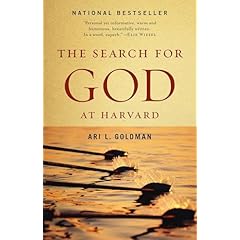 I actually bought this book on a visit to Harvard. I applied to the Divinity school there a few years ago. I didn't get in. Who knows what could have happened had I been admitted? Where would I be?
Ari Goldman did get in. He was a religion reporter for the New York Times, and in 1985 enrolled to learn more about other religions so he could write better news stories. But, in the process, he learned a lot about himself.
The study of religion is an interesting topic, mainly because so many people want to study it or claim to be able to teach it. But, theological and religious education happens all over America, and might just be done better outside the walls of institutions and churches.
Goldman's book is a chronicle of his year at HDS, but it delves too deeply into his life that it quickly turns into his autobiography, and I'm not interested in reading that.
I was hoping for more of an expose on how religion and theology are taught at one of the most prestigious universities in the world. As it turns out, it's nearly the same as other top tier schools. There are brilliant and controversial professors; a diversity of religious expression is available; lots of people are looking for something more than a degree.
Most graduate educations today are trade schools. An extra sheet of paper on your wall can open doors to interviews and jobs, but your expertise is narrow. However, as many folks today are learning, a divinity degree opens the door to working in a church, doctoral studies, or a job that your extra degree did nothing to prepare you for. So why do people get a religious education?
Lots choose to go to theological- or denomination- specific schools. They want to learn more about a certain theology or follow the path that leads to ordination in their specific faith tradition.
Other schools, like Harvard (and Vanderbilt, where I'm currently enrolled), aren't as specific. Not bound by denominational or church funding, courses vary and students can get a broad exposure to a variety of material (which is one of the major reasons I chose Vandy).
But in either setting (narrow or broad), many students seem to be looking for something.
Many claim they want a seminary degree to learn more about God. Some are looking for truth. As Ari's book suggests, some are simply trying to 'find' God.
I think that God might just be more present outside of a religious curriculum. Indeed, I would say that God has largely been missing for many institutions of higher education for some time. I've never found God in a classroom. And that's because, for me, God is outside of any walls we build, actual or metaphorical.
One of the few quotes I enjoyed from Goldman was:
The only people I would recommend this book to are those thinking of going to seminary. Whether you lack alternatives, think you might like it, or feel you have some sort of passion or calling, read the book. It might make you rethink the steps you're planning on taking. Because just maybe, you can learn about and serve God without an extra graduation.
Don't Buy This Book: The Search for God at Harvard
I actually bought this book on a visit to Harvard. I applied to the Divinity school there a few years ago. I didn't get in. Who knows what could have happened had I been admitted? Where would I be?Ari Goldman did get in. He was a religion reporter for the New York Times, and in 1985 enrolled to learn more about other religions so he could write better news stories. But, in the process, he learned a lot about himself.
The study of religion is an interesting topic, mainly because so many people want to study it or claim to be able to teach it. But, theological and religious education happens all over America, and might just be done better outside the walls of institutions and churches.
Goldman's book is a chronicle of his year at HDS, but it delves too deeply into his life that it quickly turns into his autobiography, and I'm not interested in reading that.
I was hoping for more of an expose on how religion and theology are taught at one of the most prestigious universities in the world. As it turns out, it's nearly the same as other top tier schools. There are brilliant and controversial professors; a diversity of religious expression is available; lots of people are looking for something more than a degree.
Most graduate educations today are trade schools. An extra sheet of paper on your wall can open doors to interviews and jobs, but your expertise is narrow. However, as many folks today are learning, a divinity degree opens the door to working in a church, doctoral studies, or a job that your extra degree did nothing to prepare you for. So why do people get a religious education?
Lots choose to go to theological- or denomination- specific schools. They want to learn more about a certain theology or follow the path that leads to ordination in their specific faith tradition.
Other schools, like Harvard (and Vanderbilt, where I'm currently enrolled), aren't as specific. Not bound by denominational or church funding, courses vary and students can get a broad exposure to a variety of material (which is one of the major reasons I chose Vandy).
But in either setting (narrow or broad), many students seem to be looking for something.
Many claim they want a seminary degree to learn more about God. Some are looking for truth. As Ari's book suggests, some are simply trying to 'find' God.
I think that God might just be more present outside of a religious curriculum. Indeed, I would say that God has largely been missing for many institutions of higher education for some time. I've never found God in a classroom. And that's because, for me, God is outside of any walls we build, actual or metaphorical.
One of the few quotes I enjoyed from Goldman was:
To my mind, the law is meant to be challenged in the real world. That is where it comes alive, not in 'safe' professions, like teaching, or the Orthodox-dominated world of 47th Street.If all we (those with graduate religious-related degrees) is talk about what people said when they talked about God, we're risking missing the movement of God in the world. We've got to hop on board.
The only people I would recommend this book to are those thinking of going to seminary. Whether you lack alternatives, think you might like it, or feel you have some sort of passion or calling, read the book. It might make you rethink the steps you're planning on taking. Because just maybe, you can learn about and serve God without an extra graduation.
Thursday, December 07, 2006
0
comments
 I've heard several folks rave about The Kite Runner. I don't normally read a lot of fiction, so if I'm going to take that dare, it better be good. But every time I do take the chance and pick up a novel, I'm blown away. Such is the case with this book by Khaled Hosseini.
Most every book starts slow for me. It's like we're dating and I'm not sure if it's going to be worth either of our time. So usually, no matter how good the writing may be in any genre, I feel like each book I read gets off to 'a slow start.' Such is the case with this tale, but again, it's not the book – it’s me.
Once Hosseini sets up his characters and the story, get ready for a poignant and meaningful ride. The depth of the soul and the expectations of culture serve as intangible characters in the novel. But the book is more than an expose on immigration or life in Afghanistan over the last quarter century. The book is a love story on every level: friendship, marriage, parenthood, religion. Particularly interesting is the way in which love is balanced (or enhanced?) by a sense of duty or a sense of guilt. I would read the book again just to see how this plays out between each character.
It took me a week or so to trudge through the first 100 pages. But I read the second third of the book in two days. Surprisingly, the book gets very action-oriented. Amir, the main character, is not James Bond, and his ordinariness makes you wonder what lengths you would go to for your friends. I guess you may never know until you're in that situation.
The first quote that jumped out at me was:
And then this quote towards the end impressed me:
Borrow this Book: The Kite Runner
I've heard several folks rave about The Kite Runner. I don't normally read a lot of fiction, so if I'm going to take that dare, it better be good. But every time I do take the chance and pick up a novel, I'm blown away. Such is the case with this book by Khaled Hosseini.Most every book starts slow for me. It's like we're dating and I'm not sure if it's going to be worth either of our time. So usually, no matter how good the writing may be in any genre, I feel like each book I read gets off to 'a slow start.' Such is the case with this tale, but again, it's not the book – it’s me.
Once Hosseini sets up his characters and the story, get ready for a poignant and meaningful ride. The depth of the soul and the expectations of culture serve as intangible characters in the novel. But the book is more than an expose on immigration or life in Afghanistan over the last quarter century. The book is a love story on every level: friendship, marriage, parenthood, religion. Particularly interesting is the way in which love is balanced (or enhanced?) by a sense of duty or a sense of guilt. I would read the book again just to see how this plays out between each character.
It took me a week or so to trudge through the first 100 pages. But I read the second third of the book in two days. Surprisingly, the book gets very action-oriented. Amir, the main character, is not James Bond, and his ordinariness makes you wonder what lengths you would go to for your friends. I guess you may never know until you're in that situation.
The first quote that jumped out at me was:
[1989] was the year that the Shorawi completed their withdrawal from Afghanistan. It should have been a time of glory for Afghans. Instead, the war raged on, this time between Afghans, the Mujahedin, against the Soviet puppet government of Najibullah, and Afghan refugees kept flocking to Pakistan. That was the year that the cold war ended, the year the Berlin Wall came down. It was the year of Tiananmen Square. It the midst of it all, Afghanistan was forgotten.Hosseini's book is not about the implications of Afghanistan being overshadowed amidst other worldwide events. But, one does have to stop and wonder if the Taliban's rule could have been prevented had the west kept a closer watch on what was happening. We all know the ultimate ending of what happened under Taliban rule, but if you read the book, you’ll get a glimpse of what it was really like.
And then this quote towards the end impressed me:
Closing Sohrab's door, I wondered if that was how forgiveness budded, not with the fanfare of epiphany, but with pain gathering its things, packing up, and slipping away unannounced in the middle of the night.Forgiveness is forever a tricky and elusive thing. But I think Hosseini's description allows us to catch a glimpse of what it may be like.
Subscribe to:
Posts (Atom)

