Wednesday, November 29, 2006 2 comments

Look, Nana, No Hands

This is an excerpt from the eulogy I'll be delivering at my grandmother's funeral this afternoon:

"I lift up my eyes to the hills – from where will my help come? My help comes from the Lord, who made heaven and earth."
Psalm 121:1-2


I will always remember Nana's hands.

She has a shelf full of them – ceramic and glass hands, all in different positions. Some look like they're praying. Some look like they're giving, and others are receiving. The rest appear to be holding, loving, caressing, or leading. This shelf full of collectibles will serve as a visible reminder to me of the intangible things her hands did over the years.

When I was younger, her hands would hold books as she visited me and read to me in my room on my big-boy bed. When I would visit her, she would use those hands to get out her toy collection, reserved especially for the grandkids when they visited. Her hands made sandwiches, played cards, held cut glass, and decorated dollhouses. Even at my young age, I would imagine what those hands had done over the years.

And even now, I marvel at the years that were packed into those hands. She was a mother to eight kids, a wife for 68 years, and a friend to many. I could only imagine the things those hands did that I never would: hop on a streetcar, use a washboard, or dial the operator.

For Nana, those hands served as an extension of her heart. Whatever role Nana played in our lives, those hands meant love. They might have meant the tough love of discipline when you disobeyed your mother. They might have meant the sweet love of a grandmother when she offered you candy or other 'happys.' They might have meant the tender caress only a wife can give, or a gentle touch that only a friend can show.

As she got older, Nana couldn't use those hands to bring out the toys, to hold the books, or play cards with me like she used to. But she still loved – with no hands.

We all liked to ride bikes when we were younger and shout to whoever was watching: "Look! No hands!" In a similar vein, Nana flipped the tables of time, and in a sense shouted to us, those she loved the most: "Look! I can still love you with no hands!"

As arthritis rendered those hands nearly ineffective, I made sure to use mine more and more. On several visits, I would sit and listen to the stories that made her who she was, and write down those stories to remember for days like today and all the tomorrows that follow.

She ended one story with, "If you are a Davidson, you can say to yourself, 'This, too, will pass.'"

And so we must say that today. Because we are all Davidsons. We are people who will honor the legacy of Nana's hands by using our own. Nana challenges all of us love as she did – using two hands to show the overflow of love from a big heart. The best way to preserve Nana's memory is to love those around us. Love them with vibrant actions and kind words. Love others with a listening ear and a wise counsel. Love everyone with blind compassion and unconditional affection. Because the only way you can truly touch someone's heart is not with your hands, but with your heart – like Nana did.
Tuesday, November 28, 2006 1 comments

Local Man Makes News

Thanks to Alexa Hinton at The City Paper, CoolPeopleCare continues its media frenzy.

Read her story about the beginnings and happenings of the little website that is hoping to spark a revolution of caring.
Monday, November 27, 2006 0 comments

The Stories Before Our Stories

My grandmother passed away today after a long fight.

I would visit her and my grandfather when in college, and for whatever reason, I got smart and each time I went to see them, I asked them to tell me a story about themselves, their parents, and what it was like to be them.

This week, I'll be recounting those stories here, taking them out of the paper journals that have held them captive these last few years, and putting them hear for all to see. I encourage you to do the same. As Bruce Northam says, "When grandparents die, libraries burn."

January 24, 2003
I've been watching the miniseries "Band of Brothers" this past month and have been very inspired by the stories of heroic acts during World War II.

I had known that my great-grandfather was a motorcycle messenger during the first world war, but I wanted to know more about him. So I asked Nana.

As we watched TV tonight (Nana stays on the couch mostly, on account of her worsening arthritis), Nana was commenting on the current state of things in Iraq and asking about the prospect of me volunteering to go fight over there. I promptly told her no and that she had nothing to worry about.

She then told me that right after the Pearl Harbor attacks, my great-grandfather went down to the Army recruiting office, wanting to enlist. He was 50 years old. When he was told that he was too old, he asked if there was any other way he could be of service.

Nana smiled as she told that story. She ended it with: "I learned patriotism at my father's knee."
I heard that story just as things in Iraq were kicking off, and it seemed like a good idea at the time for us to invade. Nana felt the spirit of her father alive in her at that time, feeling that some people should go and volunteer to fight a just war (in her mind) just as he did so many years earlier.

As I visited Nana since the Iraq war began, she grew increasingly displeased with the loss of life there. She grew disappointed with the American leadership of the war.

But that night, I was proud of my great-grandfather, even though I knew very little about him. Ever since I heard that story and patriotism so defined, I continue to ask myself, "What does it mean to be a good American?"

My forefathers and mothers were ones. I hope I can be one as well, which for me means not fighting.
Monday, November 27, 2006 0 comments

Influence

In hopes of raising awareness about the reality of genocide in the Darfur region of Sudan, Sam writes every Monday about a key issue in an attempt to stop the atrocity. Doing so may not bring about a wave of change, but it is a small ripple that represents the tide that needs turning.


I thoroughly enjoy reading business magazines. Blogs, news sites and talking heads may be your thing, but if you want to keep up with why the things happen that give those people something to talk and write about, then pick up Fortune magazine.

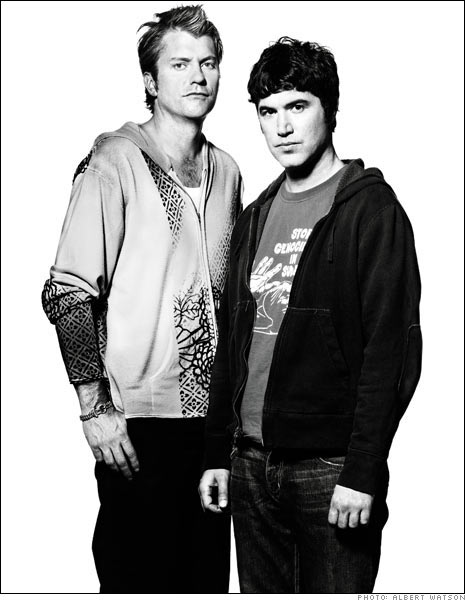
In the current issue, they feature the 30 most influential business people of 2006. Making the list are MySpace founders, Chris DeWolfe and Tom Anderson. Maybe you're tired of hearing about these guys and their overexposure, but here's what I like: in their photo, Tom is brandishing a shirt that raises awareness about Darfur.

The site may play host to stalkers and time-wasters, and it may not work like it should a lot of the time, but these guys have made headlines, and Tom (everyone's first friend) used his snapshot in a top business magazine to spread the word.

Maybe he just wanted to look cool. Maybe he wants to be George Clooney. But, MySpace has been plugging Darfur with a recent concert series, and is using its wild ride to help others.

I'm down with that. And I now want one of those shirts.
Sunday, November 26, 2006 2 comments

Final Thoughts on NYC

We went. We saw. We walked. We rode. We experienced.

My first trip to New York City went well, despite the travel fiascos of the first day that attempted to derail our entire experience of the city.

After the swanky view of the parade on Thursday, and after taking in a stellar performance of Rent, things began to improve until our departure on Saturday.

We arose early on Friday (at 5 AM) in an attempt to watch a taping of the Today show. But, since lots of people were in town for the holiday, by the time we arrived to stand in line (at 5:30) an entire marching band had beaten us there, along with some other people. Knowing that 300 people were ahead of us to stand behind Meredith and Matt, we decided to grab some breakfast at Dunkin Donuts (which makes a mean gingerbread latte).

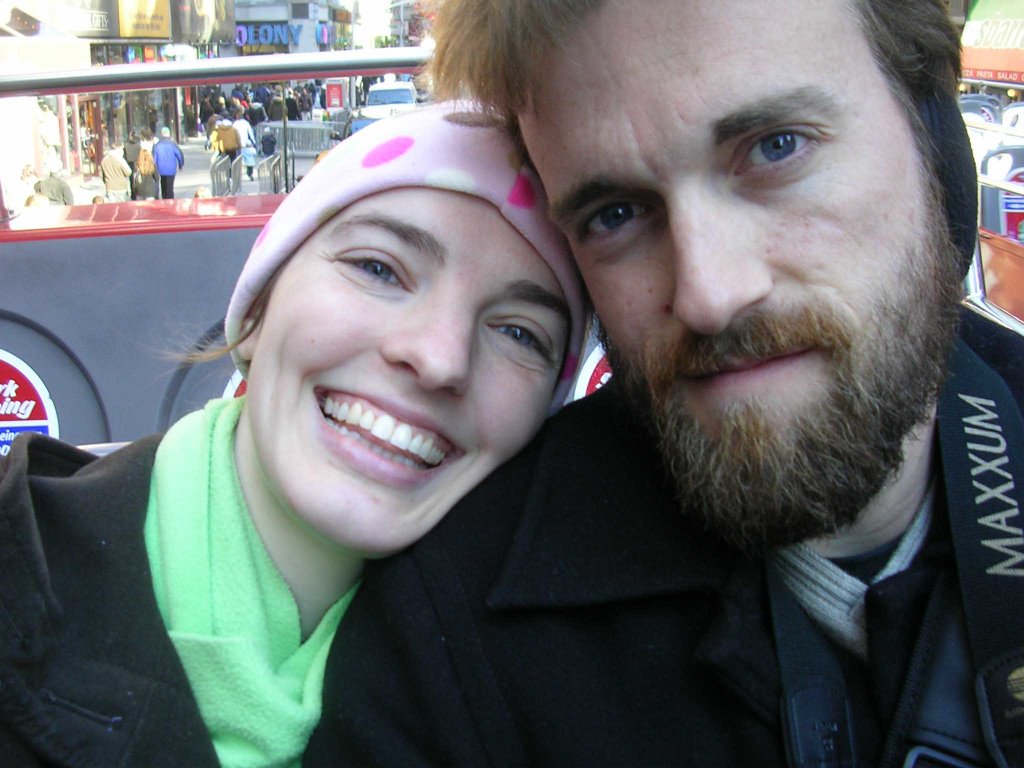
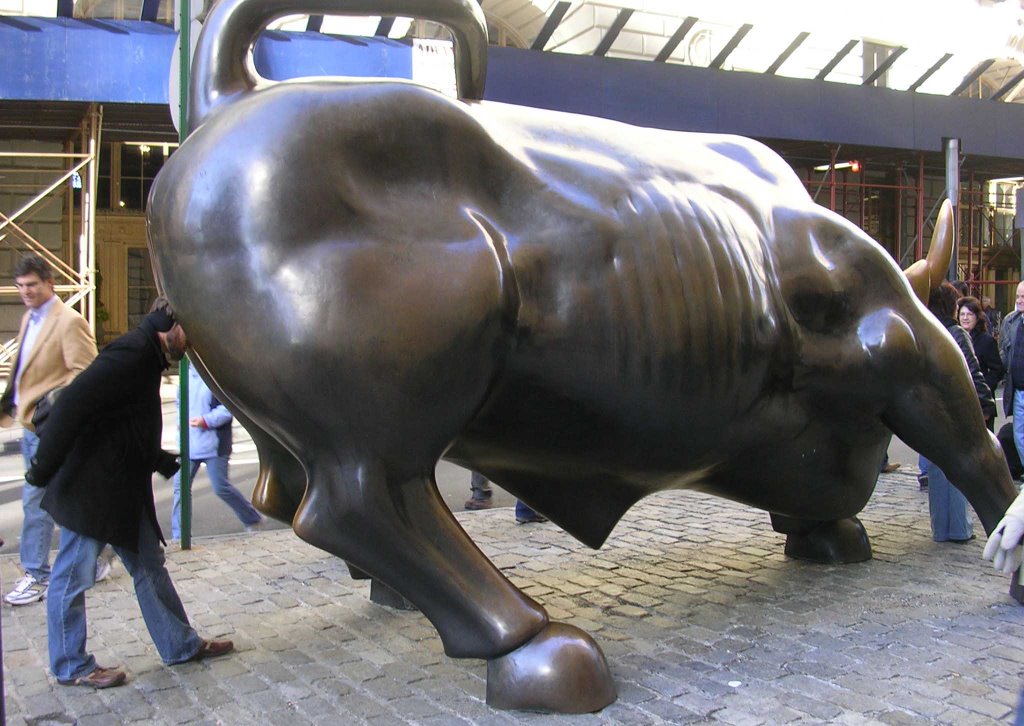
We went back to the hotel, took a nap, and then boarded a double-decker tour bus. Because the city is so humongous, and we knew we couldn't do everything, we decided that an overview of everything would be a good start. So we did the touristy thing and saw all of downtown. We hopped off at Wall Street and Ground Zero and then headed into Brooklyn. After eating at Carnegie Deli and seeing The Color Purple, we called it a day.

On Saturday, we arrived at the Empire State Building to take in the view, and then bus toured Uptown, including Harlem, Central Park and the upper East and West sides.

Jet Blue did manage to get us back okay, but it still doesn't make up for the dead battery.

New York is a great American city, and there's a lot to see and do. I think next time will be a museum trip, as we didn’t visit any this go-round. It's a great place to spend a long weekend, but make sure you bring comfortable shoes. You also have to be able to stand the smell of trash and not mind bumping into people ALL the time.

And yes, it looks like it does on TV.

I leave you with some shots of the trip:


Sunday, November 26, 2006 0 comments

CoolPeopleCare Weekly Roundup (11/20-11/24)

*Monday, November 20:* Want Differently
> Flip your wish list and want on behalf of someone else.

*Tuesday, November 21:* Nothing But Nets
> How do you save a continent? One bed at a time.

*Wednesday, November 22:* Give Gloves
> Lend a hand. Literally.

*Thursday, November 23:* Be Thankful
> 300 seconds of gratitude never hurt anyone.

*Friday, November 24:* Buy Nothing Day
> Participate by not participating.

Thursday, November 23, 2006 1 comments

Thankful

It’s late in New York, and today turned out a lot better than yesterday.

It’s Thanksgiving, and every four years, the Davidson family packs up and heads out to spend Turkey day outside of the confines of Tennessee.

In honor of the holiday, I’ll recap our day, thanking everyone who was a part of this day designed for the giving of thanks.
  • I am thankful for my family for being with me on Thanksgiving.
  • I am thankful for Lynnette for being my companion in everything, including rainy New York Thanksgivings.
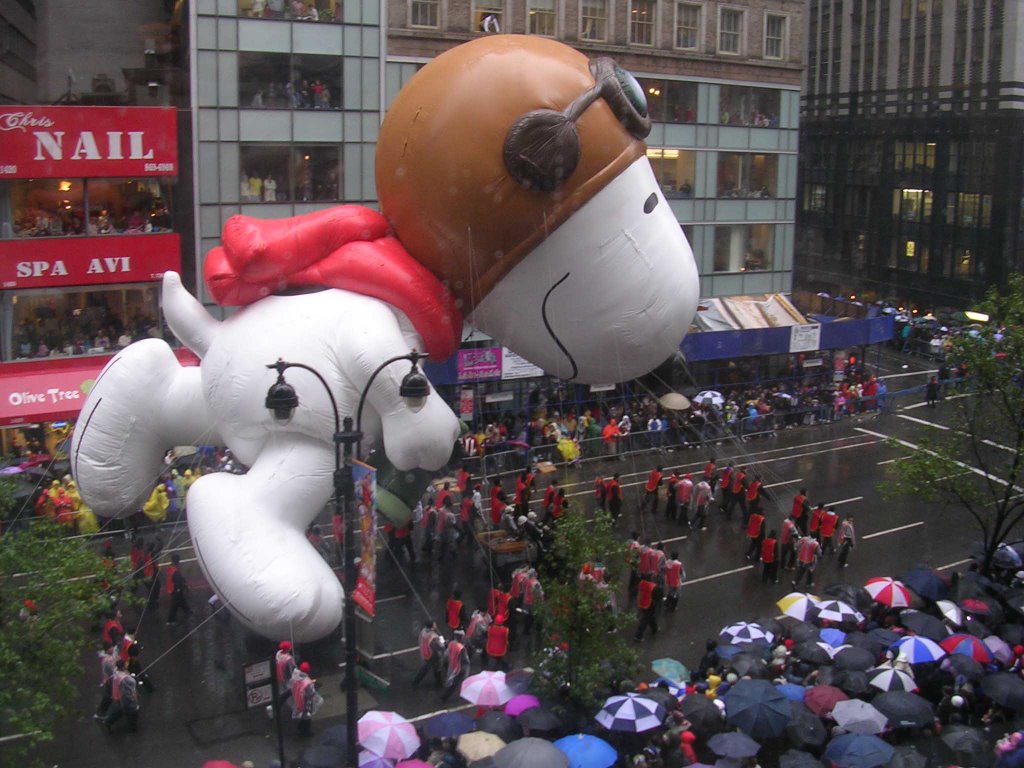
  • I am thankful for Jim and his family and his connections that allowed us to view the Macy’s parade from three floors up over Broadway.
  • I am thankful for all those who marched, rode, and walked in the parade.
  • I am thankful for Clark, our waiter at Junior’s, which is where we ate for Thanksgiving dinner.
  • I am thankful for the hotel staff, working on a holiday so that I can eat breakfast, have a clean room, and enjoy a pleasant stay.
  • I am thankful for those working at the pizza joint that make a great slice of pepperoni and olive pizza.
  • I am thankful for the cast, stagehands and theater staff of Rent who worked on Thanksgiving evening and put on one hell of a show.
  • I am thankful for the cab driver that brought us back to the hotel so we could stay dry.
Thank the people in your life, no matter what role they play.
Thursday, November 23, 2006 0 comments

Christmas Is Not Your Birthday

Shopping starts bright and early tomorrow. While many line up for the latest deals, I'll be lining up to try and get my face on the Today Show.

But if that doesn't work, I got my face on TV today.

Religion reporter Jamey Tucker ran a story about CoolPeopleCare's Christmas is Not Your Birthday campaign.

Click here to see the video for yourself. And I'll let you know whether or not I get some face time with Meredith and Al or not.
Wednesday, November 22, 2006 5 comments

We Didn't Make It

As Lynnette has already recounted, today was an AWFUL day of travel.

Yes, it's the day before Thanksgiving. Sure, we expect things to be busy. We were even prepared to face the small delay due to weather or congestion. But here is what we did NOT expect:

Someone left the lights on in the Jet Blue airplane overnight and the battery died. Seriously. That's what they told us. The battery was dead – like on a car. And, like a car, it's needed in order to start the plane and get it so all systems are go.

So, they called maintenance and tried to jump it. Seriously. That's what they told us. They didn't pull up another plane or anything. They just tried to charge it so we could get going. At that point, our scheduled departure time of 7 AM was pushed back about half an hour. No worries.

But, when they couldn't get the battery charged enough to start the plane, the problem got just a little bit bigger. Since Jet Blue only has a few flights out of Nashville, there's no dedicated maintenance hanger with spare parts. So, there was no battery in Nashville. This meant they had to charter a battery in from Ft. Lauderdale. Seriously. That's what they told us.

At this point, our flight was pushed back three hours, until 10. We were a little nervous because we had Letterman tickets, and the taping of the show was going to be one of our highlights. We had to be at the Ed Sullivan Theater at 3 PM (Eastern time). We should still be able to make it just in time.

Then it all went to hell.

The charter was late. Another Jet Blue flight from New York was coming in and the next scheduled flight from Nashville to JFK was at 11:15. The crack team of customer service folks at Jet Blue remedied our delay by doing the following:
  1. Giving us a $10 voucher to use in the airport foodcourt.
  2. Offering us a travel voucher for a future one-way Jet Blue flight in the amount of whatever we paid for our one way to JFK.
  3. Putting all of us who were on the 7 AM flight on the 11:15 flight, and putting those people on our original plane once the battery arrived.
Our flight was delayed even further because of weather on the east coast. Traffic was terrible into Manhattan.

And we got to the theater at 4:12. Our tickets had been given away. We had no options. We missed it.

Thanks, Jet Blue.

I know stuff happens when you travel. I can handle weather delays and the occasionally routine maintenance that gets you off track for a little while. But when someone slipped up and essentially left the plane running with the keys inside, then that's unacceptable.

I don't think I'm the only person inconvenienced, but I used to work for one of the best hotel companies in the world. The company was (and is) one of the best because of how they correct mistakes. Thus, when things do go wrong, it is the responsibility of the one who made the mistake to do the next best thing. Jet Blue did not do that.

Thus, they will be getting a letter from me requesting a roundtrip voucher. I will be sure to post that letter here once I write it.

After failing to make the show, and after the failure of the CBS pages to be able to offer us any alternatives, we shopped a little and grabbed some food. It's raining here now, so we're in for the evening.

Tomorrow, we'll watch the parade and hopefully things will be top notch until we leave on Saturday.

But, based on today, my Jet Blue days are done, and I think I can effectively check New York off of my list. But, things could be worse. Those originally booked on that 11:15 flight weren't slated to leave Nashville until 8 PM. Our battery-less aircraft was never fixed, essentially stranding 100 folks in Nashville.
Tuesday, November 21, 2006 6 comments

An Attack on Marriage

A few weeks ago, a lot of people voted Yes on 1. Some of them thought that defining marriage between a man and a woman in the state constitution would protect the institution.

If you know people like that, PLEASE DO NOT show them this article from the Washington Post about marriage rates in France. Marriage is being attacked over there like crazy. It's on the decline. Families and children and love are on the rise, but without marriage, WHERE WILL WE BE? (Am I sounding dramatic enough?)

The main reason:
The tax breaks the French government offers married couples, which are not as substantial as U.S. marriage tax reductions, are not enough to persuade most cohabitating couples to formalize their relationships. In France, the greatest financial and tax incentives target the number of children a couple has rather than the parents' marital status.
How many people get married in the US for the tax breaks or the kids? The expectations of religion and the economic advantages do more to increase divorce rates than allowing people who really love each other (regardless of gender) to marry.

I'm happy I get a tax break for being married, but even if I didn't, my wife and I would have still wed because we loved each other and wanted to formalize that love with a union recognized by the state and the church (these two are separate in my mind, by the way). And, a lot of relatives would have appreciated a certificate of marriage in our possession before we started shacking up together.

But, religion ain't universal, and love ain't exclusive. This is why I voted No on 1. And this is why, were there no economic advantages, you'd see 'marriage' as is decline as it is in France.

Bottom line: Marriage is not cheapened by homosexuals using the term; it's cheapened when heterosexuals do it for the tax breaks.
Tuesday, November 21, 2006 1 comments

I'm Gonna Be There for This Crap

David Blaine has begun spinning around in a gyrosope above Times Square.

Tomorrow, I will be experiencing the Big Apple for the first time. There's a lot to see (more than is possible in our short time there), but I will NOT waste my time watching this nut dance around suspended from a crane.

I know there is a lot of stuff going on in NYC, but I don't have time for this clown.

However, I do appreciate the fact that there is a charitable outlet for his endeavors, as he is taking 100 children on a shopping spree in support of the Salvation Army. This will happen after he escapes from shackles.
Tuesday, November 21, 2006 0 comments

2 for the Post

The Washington Post has 2 pieces on Darfur today.

The first describes a new nightly exhibit at the U.S. Holocaust Memorial Museum called, "The Darkest Light." Each night, images from Darfur are displayed outside the museum for passers by to see what is actually happening in Sudan.

The second piece is an editorial by Anne Applebaum. While I wish she advocated for more action, she does a good job of clearly laying out the reasons why places like the U.S. (and other Western powers) have not yet gotten involved in major scale operations to end the genocide. Namely, there are no far-reaching political implications as Sudan is not a major player in global geopolitics. It is sad that this is true, and that such a view further marginalizes the people of Africa.

Both articles are well worth your 8 minutes.
Tuesday, November 21, 2006 2 comments

Here We Go Again

The US Mint has announced it will issue a new set of dollar coins. Director Edmund Moy says,
"Using a dollar coin is more convenient in parking meters, it's more convenient at the subway kiosk, it's more convenient in vending machines."
He's right. Except for the fact that most people hate carrying coins. So, while making a $50 coin may come in handy at the self check-out at Kroger, I'll stick with the paper.
Monday, November 20, 2006 0 comments

The Messenger

In hopes of raising awareness about the reality of genocide in the Darfur region of Sudan, Sam writes every Monday about a key issue in an attempt to stop the atrocity. Doing so may not bring about a wave of change, but it is a small ripple that represents the tide that needs turning.

Now that we've defined our message of overlap and commonality, we must find someone who will bring the message to the Janjaweed soldiers. Who is best equipped to deliver this message? Who can accurately bring the good news that there is hope in a shared suffering?

In Gerry Mackie's description of Tostan, the message is initially delivered by Western 'outsiders.' However, allies are quickly formed so that the message is not seen as being exclusively delivered by foreigners 'who think they know better.' Understandably, any such attitude would lead to the messengers being branded as irrelevant and the message itself would fall on deaf ears.

However, due to the overlap in the message, the Darfurians should be the ones to bring the message to the Janjaweed. Their shared suffering allows them to deliver the message with integrity. They have authority due to their victimization and their privilege as 'insiders,' even though their position is viewed as inferior by the Janjaweed.

The plan? Upon impending attack, a village should formally surrender, announcing that they want to meet the demands of the soldiers as best they can. They must appeal on the grounds that they know why they soldiers attack, and that there are common threads upon which a bridge can be built to lay foundations for a healthy future together.

While such an idea seems ludicrously naïve, there is no doubt that in some cases there will be more killings, and the vulnerability of the Darfurians will be taken advantage of. Thus, it is recommended that the first attempt at this be done with a small group (five or less) of attacking Janjaweed (as opposed to a band of twenty or more).

Once an envoy from the village has appealed to the soldiers, a bond will be formed on their shared commonality and a peaceful future can begin. This approach will be combined with a public awareness and education campaign aimed at the Janjaweed soldiers. This campaign will be detailed next week.

Now, who will bring the message to the Darfurians so that they know how to speak with the Janjaweed?

Again, following Tostan’s method, an educational campaign must be done initially so that people can find hope in the message and its delivery. The campaign in Darfur will mirror that in Senegal that ended female genital cutting. Once Darfurians have been trained, they will be able to not only communicate effectively with the Janjaweed; they will be prepared to ultimately lead their own autonomous communities and governments.
Monday, November 20, 2006 0 comments

A Question of Uniform or Religion?

A British Airways employee lost her appeal to wear her cross necklace.

I must admit, this is pretty stupid. She's not lambasting anyone with her faith. She's wearing jewelry. It will be interesting to see how this is played out, for example, if it becomes a uniform thing or a faith thing.

At the hotel I used to work at, I couldn't (as a male) wear an earring. So, if I had worn a cross earring or a smiley face earring - it wouldn't have mattered - it was a question of proper uniform. But my ears aren't pierced, so it doesn't matter.

So, could she wear a headscarf with a cross on it? If so, I can hear the marketing geniuses at Lifeway scrambling...
Sunday, November 19, 2006 0 comments

Redemption

Former child laborer Om Prakash has been awarded the International Children's Peace Prize. After his rescue from forced labor, he became a champion for human rights.

Read the whole story here.
Sunday, November 19, 2006 0 comments

CoolPeopleCare Weekly Roundup (11/13-11/19)

*Monday, November 13:* Homeless Awareness Week
> November 12-18 is National Homeless Awareness Week.

*Tuesday, November 14:* Mix It Up
> Sit down for lunch with someone different.

*Wednesday, November 15:* Check It Out
> The library is free AND local. Who knew?

*Thursday, November 16:* Use Less Packaging
> About 33% of what we throw away is packaging.

*Friday, November 17:* Turkey Choices
> With Thanksgiving less than a week away, it’s time to decide what’s on the table.
Saturday, November 18, 2006 0 comments

Buy This Book: How (Not) To Speak of God

When I began the book, I thought long and hard about putting it down. But, when I finished, I wanted to read it again.

At first glance, Peter Rollins' How (Not) To Speak of God seems theologically heavy. His references to Derrida and Dionysius made me feel like I was reading philosophy back in undergrad. I vary in what I read throughout the year, so I do like to challenge myself, but I just didn't feel like reading something like this.

But by persevering and wading in a little deeper, Rollins' insights are profound and prophetic. He is heavy on praxis, as is evident by the entire second half of the book being a collection of liturgy. This book is the perfect combination of theory and praxis for the emerging church.

And, I think it's the best book about the emerging church, capturing as best a definition as possible of that which fights against classification. I encounter lots of people who want to know what the emergent church is, and instead of fail trying to encapsulate something that resonates so deeply with me, I usually rattle off a list of books they should read. This book will now be at the top of that list.

I like that Rollins isn't scared to take a stab at something. Throughout, he begins phrases with, "The emerging conversation…" and then completes them with definitions, descriptions, and qualifications. Maybe he's wrong (I don't think he is), but at least he doesn't play the bashful card and plead the fifth. Sure, he may step on toes, and some may not feel that he got it quite right. But he tried. And I like that.

I also love that he takes on and offers a new look at old Christian staples such as salt and light, evangelism, and the 'God-shaped hole.' He even tells the church (universal):
Rather than encouraging people to join our community (whatever 'our' community happens to be), we ought to be trying to help people to find the right community that will aid them in their further conversion.
The first 75 pages (the theory part) are packed full of fantastic quotes for any Christian trying to live a life of authenticity. His anecdotes and illustrations are memorable, hammering home key points that any believer ought to remember.

His main point? You don't know everything because you can't know everything. The very essence of God is such that the more you think you know, the less you actually do. But instead of a journey of futility, this should inspire a life of emulation, mimicking Jesus every step of the way, living with a prejudice of love.

Spend a few hours with the book. Then, whenever you think you've got it figured out, read it again.

And I'll leave you with this:
For most Christians, the question, "Would you die for your beliefs?" is the most radical one that can be asked – to which the faithful will answer with a defiant "Yes." But Amen asks a more radical question, namely, "Would you kill your beliefs?" In other words, would you be prepared to give up your religious tradition in order to affirm that tradition? Can you give up the very thing you would die to protect, not because of something even more powerful, but rather because of another's suffering?
Saturday, November 18, 2006 0 comments

Christmas Coverage

The Christmas is Not Your Birthday campaign kicks off on Monday. But Tennessean columnist Ray Waddle felt that the concept resonated enough with readers already.

He's featured CoolPeopleCare in his weekly column about faith. It's a good read, and we love getting good press like this. This of course now means that I have to go buy a copy of the paper.

This campaign we're launching might also be a welcome refresher for those of you who wanted a PlayStation 3, but didn't want to get mugged or shot.
Friday, November 17, 2006 2 comments

Look for Me on Letterman

Thanks to Lynnette's hard work, we've scored tickets to Letterman next week.

If I can come up with a sweet stupid human trick, I could get some airtime. Look for me (probably in the balcony) on Wednesday's show.
Friday, November 17, 2006 1 comments

Web Rage

When everyone has a blog (and therefore thinks they're right), things like this happen.

I can picture consultants right now racing to set up the first 12-step Blog/Chat/Forum-aholics groups.

"Hi. I'm Sam, and I blog."
Friday, November 17, 2006 0 comments

Friday Words

Halfway through Peter Rollins' book, "How (Not) to Speak of God," I found these wise words:
A faith that can only exist in the light of victory and certainty is one which really affirms the self while pretending to affirm Christ, for it only follows Jesus in the belief that Jesus has conquered death. Yet a faith that can look at the horror of the cross and still say 'yes' is one that says 'no' to the self in saying 'yes' to Christ. If one loses one's life only because one believes that this is the way to find it, then one gives up nothing; to truly lose one's life, one must lay down that life without regard to whether or not one finds it. Only a genuine faith can embrace doubt, for such a faith does not act because of a self-interested reason (such as fear of hell or desire for heaven) but acts simply because it must. A real follower of Jesus would commit to him before the crucifixion, between the crucifixion and the resurrection, and after the resurrection.
And then here's the kicker:
Love acts not whenever a certain set of criteria has been met, but rather because it is in the nature of love to act.
Thursday, November 16, 2006 2 comments

Toss the Coffee Maker

Today, I purchased the bottomless coffee mug from Bruegger's. I'm on cup #1.

For $99, you get a shiny blue travel mug with the Bruegger's logo on the side. And, you get to fill it up as much as you want until the end of next year. Coffee, tea, and soft drinks are all fair game.

So, as someone who walks by Bruegger's 2-4 times every weekday, I should make my money back by the end of this year. I don't think I'll bankrupt them, but I do think the money I spend on Panera food will now be reallocated. It's a suave move for Bruegger's. I just need to carry my own Sweet'N Low (they only have the yellow and the white).

Stop by and get your bottomless mug today and kiss Starbucks and your coffee pot goodbye. Say hello when you stop by; I'll be at that booth in the corner.
Wednesday, November 15, 2006 2 comments

Borrow This Book: Faster

I just finished reading Faster, by James Gleick. I offered quotes along the way last week and on Monday.

The book is an in-depth look at how we deal with time in an eternal attempt to beat the clock, to pack more into our days, and to squeeze every ounce out of every second. Gleick highlights several causes of this as he details our infatuation with time over the last century.

The book was published in 1999, but I feel that if I had read it then, it wouldn't have meant much. Seven years later, the book is insightful both professionally and personally.

I work in the realm of time, trying to remove the excuse "I don't have enough time" that some people use when asked why they don't give back or serve others. Therefore, I found fascinating the attempts some use to save time, which are often counteracted by similar attempts from others to slow down.

Personally, I am someone who hates to feel like time is being wasted. I carry a book with me in case I have to wait in line, get stuck in traffic, or arrive somewhere early. I talk while I drive, catching up on messages en route to a meeting. I wake up at 5 every morning, no matter what day of the week, to begin my quest towards filling my day with everything possible in order to contribute to my life's meaning. For me, sleep is overrated as very little can be accomplished when you're unconscious.

Even now, I'm planning how I will maximize 2 hours of flight time to New York next week. Thus, as magazines arrive between now and then, they will go unread until I'm sitting in the terminal an hour before my flight. Why read them now when I'll be stuck somewhere with nothing else to do? Insane, I know.

When thinking of more and more ways to become the epitome of efficiency, I was struck by one of Gleick's analyses. In his opinion, there is a cap on speed (other than light). In terms of human dynamics, speech peaks at about 150 words a minute. But listening is capable up to 600 words a minute. Time could be saved even more, then, if we were only able to speak as fast as we could listen. The only solution is to speed up those CDs and books on tape we enjoy. Using TiVo and captioning, you can actually read an episode of Scrubs in about 7 minutes. Law and Order may take 22.

But, our everyday conversations do set limits on who we are and exactly how fast we can live life. After all, it ends up being the ordinary human interactions that change our lives in the most profound of ways. Very few of us will look back on our lives and thank the DVD player or the microwave for adding meaning and importance to our existence. We will remember the walks in the parks, the big occasions, the little memories, and the times we fell in love. It was these moments, and not gadgetry, that truly made time stand still.

There may be no big rush for you to sit down with this book. I am impressed by the little things, which is why I was impressed by the book. But, it had been sitting on my shelf for over 5 years before I finally got to it. And, even though it still rang true with no mention of Google, five more years unread may make it obsolete.

The best quote of the book, that echoes my thoughts about when time truly stops for us is this:
We were born connected. Solitude came with maturity.
Wednesday, November 15, 2006 1 comments

Eating Turkey in the Big Apple

One week from right now, the Davidson crew will be landing in New York City. It will be my first time in the big city. We'll take in the parade, the sights, and anything else Lynnette has planned.

When I travel, I like to sample the local eats, so feel free to offer places to grab some grub. We're staying near Central Park, but I hear they have these subway things that can get you to other parts of the city.
Monday, November 13, 2006 1 comments

The Overlap

In hopes of raising awareness about the reality of genocide in the Darfur region of Sudan, Sam writes every Monday about a key issue in an attempt to stop the atrocity. Doing so may not bring about a wave of change, but it is a small ripple that represents the tide that needs turning.

The Janjaweed militia kill for several reasons, but ultimately, they work for the same reasons most of us work: survival. Without work, most of us have no money, which we use to by the necessities of life, such as shelter, food, clothing and other basic needs. Part of Janjaweed payment, however, is the loot they get from raiding a village. When they enter a certain part of Darfur and raze the community, the animals, food, and other items they glean from the abandoned tents become theirs to barter with or sell at their leisure.

Of course, part of the reason they kill and rape (as opposed to just stealing) has to do with a lack of education regarding their fellow countrypersons. Believing propaganda from the government, these marauders feel that Darfurians are less than human at worst, and simply inferior at best. Thus, it is easy to kill someone when you feel as if they do not deserve to live. Their misunderstanding of their shared commonality contributes to the continuation of the genocide. Therefore, by addressing the shared humanity between the perpetrators and the victims, we can hope to build a bridge toward the cessation of the killing.

By categorizing the traits of their specific human condition, both the Janjaweed and the citizens of Dafur all have a need for the following:
  • Survival
  • Land
  • Governance
  • Race
When we examine these for each, we get what seems like two very different pictures:
Survival:
  • The Darfurians stay in camps, flee the militia attacks, and live in refugee camps for this reason
  • The Janjaweed kill, attack and destroy for this reason, as it is how they earn income and what they believe
Land:
  • The Darfurians live in Western and Southern Sudan
  • The Janjaweed live in Eastern and Northern Sudan
Governance:
  • The Darfurians want a fair representation and an equal say in those who govern them
  • The Janjaweed obey the commands of a dictator/president
Race:
  • The Darfurians are dark skinned Africans
  • The Janjaweed are light skinned Africans
There are shared commonalities in each of these. The shared qualities of each categories are greatest with the need for survival, and then the overlap decreases as we work our way down to race. But, where there is overlap, there is a message.

Similarly, below the surface are categories which also provide the overlap needed to send a message upon which community building can begin:
Race:
  • The Darfurians are dark skinned Africans
  • The Janjaweed are light skinned Africans
Religion:
  • The Darfurians are African Muslims and Christians
  • The Janjaweed are Arab Muslims
Humanity:
  • The Darfurians are people in the midst of the human condition
  • The Janjaweed are people in the midst of the human condition
Suffering:
  • The Darfurians experience victimization at the hands of the Janjaweed
  • The Janjaweed experience victimization at the hands of Khartoum

As you can see, below the surface, the commonalities are much easier to find. Beginning with an appeal to the shared humanity and suffering each group has will lead towards an acknowledgement of that which is in common above the surface, such as the origin of their races, their shared hope for Sudan and Africa, their need for representative government, and their universal quest for survival.

Below the surface, commonality is greatest at the bottom, in terms of suffering and decreases as we move towards race again. Imagine two hourglasses for each group, where 'survival' is at the top and 'suffering' at the bottom. In the middle, where the sand exits the top, there is a line, which will serve as 'the surface.' When we push each group's hourglass towards one another, the top and bottom overlap simultaneously and so fourth until both hourglasses are juxtaposed, one on top of the other. The more they are pushed closer, the more the groups share, and the deeper the message can get.

Therefore, the initial message has to stress the shared need for survival based on the human condition of suffering. When the Janjaweed recognize this basic right of the Darfurians, and the fact that this need is shared, new dreams can emerge wherein the two work together to ensure the survival of the other. In my wildest dreams, the Janjaweed protect a village in exchange for food and clothing. Living together, the group bridge the other gaps (even race) until the community thrives on trust built from shared needs.

There's your message. Now we have to figure out how to get it there.
Monday, November 13, 2006 1 comments

Christmas Is Not Your Birthday

FOR IMMEDIATE RELEASE - November 13, 2006

COOLPEOPLECARE.ORG LAUNCHES CHRISTMAS IS NOT YOUR BIRTHDAY CAMPAIGN

NASHVILLE, Tenn. – CoolPeopleCare.org, a philanthropic website based in Nashville, today announces the launch of "Christmas is Not Your Birthday," a campaign that urges website visitors to focus on others this holiday season by offering tips on how to rethink wish lists and give generously. The campaign will run from Monday, November 20, to Monday, December 25.

CoolPeopleCare.org's signature feature, "5 Minutes of Caring," will direct its Monday content towards this campaign. The 99-word daily article features helpful hints, practical tips and links to inform readers of the many ways in which they may make a difference in less than five minutes a day.

Each Friday's feature, "More Time on Your Hands," will showcase true stories of people who have dared to take the "Christmas in Not Your Birthday" challenge.

Launched in August 2006, CoolPeopleCare.org is an offering of CoolPeopleCare, Inc., a company founded by Nashville residents Sam Davidson, CEO, and Stephen Moseley, President. In just three months, it has served more than 25,000 visitors.

Davidson and Moseley believe that consumerism has become "The Reason for the Season" in the U.S.A., but that the money spent each holiday season could be better directed for a longer-term, society-wide impact.

Though the site seeks to encourage people to give, Davidson knows that attempting to change the spending habits of Americans is no easy task. "We're here to help," said Davidson. "We're accustomed to certain holiday traditions, like shopping, so CoolPeopleCare.org is here to show people, step-by-step, how to begin traditions of generosity."

CoolPeopleCare.org is the first endeavor of the newly created CoolPeopleCare, Inc. The website is designed to educate and motivate individuals to get involved in their local communities. Believing that people want to give back, but don't have the time, the site offers a 99-word article every weekday to inform readers how to make a difference in less than five minutes. Also believing that people want to give back but don't know how, the site also includes an events calendar with local happenings that have a social benefit. The concept for the site was developed in early May and the site was officially launched on August 18.

CoolPeopleCare, Inc., a Nashville-based company, was founded by Sam Davidson, CEO and Stephen Moseley, President. The newly formed company's model is one of social entrepreneurship, by which it creates positive social change as a direct function of its business. For more information about CoolPeopleCare, Inc., CoolPeopleCare.org, or the "Christmas is Not Your Birthday" campaign, visit www.coolpeoplecare.org or contact Sam Davidson, (615) 260-3082.
Monday, November 13, 2006 0 comments

It's Not God's Fault

For those who felt they were left hanging by last week's question, here's my answer:

In much of the Hebrew Bible, God seems to be actively in control, dealing out punishment for sin and blessings for righteousness, thereby creating a works-based concept of justice. Most calamities are justified with the argument that sinful people deserved it (the hardened heart of Pharaoh), and privilege is reasoned as reward for proper obedience. If God allots punishment to those who eat forbidden fruit [Genesis 3:22-23] or to a king who has an affair [2 Samuel 12:11], what happens to this concept of justice when bad things happen to seemingly innocent people? Is God being unfair, unjust or immoral by actively causing or passively allowing disaster to those who appear to deserve it the least? In looking at the examples of Job, Cain, and the genocide of the Canaanites, such atrocities are not deemed by the writers as unjust or as coming from an unfair God because the end always justified the means. In these examples, God's justice remained the end, and the means were explained away as the work of sinful humans or Satan. Because of this, suffering, favoritism and genocide – acts that are gross and violent in the minds of modern readers – are used to convince readers as to the supremeness of God, even if it means ignoring some of the worst moments of humanity. When things don’t go according to the "sin=punishment, obedience=blessing" framework, the blame is shifted, relieving God of the moral culpability of random evil. Catastrophes then become mere vehicles by which the community could arrive at an appreciation and worship of the God of justice. The physical and emotional suffering of a righteous man, the rejection of what appeared to be a perfectly good offering, and the destruction of a people group are not seen as unfair. Because of these acts – or despite them – God remains holy and just.

Job was deemed a righteous man [Job 1:1], and therefore undeserving of undue affliction. Yet, God permitted Job to be tempted in a great cosmic wager with Satan [Job 1:12]. After losing family and property, Job was persuaded by friends and his wife to curse God and die [Job 2:9]. But, Job remained faithful and was rewarded in the end [Job 42:10]. In this story, Satan is the acting agent and the bringer of harm [Job 2:7]. Job correctly understands this and "did not sin or charge God with wrongdoing." [Job 1:22] The lesson of the story is that sometimes in life, unmerited and terrible suffering occurs, perhaps even at the direct permission of God, but not always at the hand of God But, if the victim remains faithful and does not turn away, then God will rightly bless the sufferer.

Cain and Abel both presented sacrifice offerings to God [Genesis 4:3-4]. For no apparent reason, God looks more favorably upon Abel’s. God acts arbitrarily, but not unfairly, because God must keep order and accept the best sacrifice at all times, and it is reasoned that Cain's offering was less worthy than Abel’s. Therefore, blame shifts to Cain as the one who brought a second-rate sacrifice to God. Cain is understandably upset and kills his brother for revenge [Genesis 4:5-8]. Now that Cain has more clearly offended God by committing murder [Genesis 4:10], mercy is shown in that Cain is not killed for his sin [Genesis 4:15], but still must be "a fugitive and wanderer on the earth." [Genesis 4:12] Cain failed his test by 1) not remaining faithful despite God’s arbitrary approval of Abel’s sacrifice, and 2) by not mastering sin [Genesis 4:7]. Even in rejection, a human is to obey God. But even when humans fail and act out of anger, God can bestow mercy and justice simultaneously.

As the Israelites take the Promised Land in conquest, leveling cities and killing innocent civilians [Joshua 6:21], the notion of such genocidal acts being sanctioned by God [Joshua 10:19] seem contrary to the love and mercy and justice of God. However, because God is faithful and promised deliverance and inheritance [Exodus 32:13] to the children and grandchildren of slaves, nothing would stand in the way of the completion of such a promise. By way of slaughter of the Canaanites, God delivered God's faithful people, rewarding them for their long trek through the wilderness. For the Deuteronomist, fulfillment of an age-old promise takes priority over the horrors of ethnic cleansing. Upon recounting this tale, Israelites would not think of the bodies that were strewn in the streets; instead, their focus was on remaining faithful to the God who delivers. In looking back through history from their privileged perch as 'chosen people,' the destruction of a group of people is a mere speed bump on the road towards inheritance. If one is wealthy, in power and safe, then one can naturally assume that such a social framework is the result of divine handiwork, even if the events that led to such a framework included genocide. It is not God's fault, then, if people were killed. The victims were the ones who stood in the way of God's promises to Israel.

Acquitting God of the responsibility of these horrible events by justifying their occurrence with the hope of a future blessing trivializes these human experiences. Such emotions and situations are nearly universal around the world (both then and now). Simply dismissing them as 'not that big of a deal' when compared to the awesome majesty of YHWH, means that God, in fact, is present as a sort of neutral referee, observing only that everything go according to plan. Events and prejudices can therefore be justified and the name of God used as a proverbial trump card in any situation.

Thus, there is no justice IN Job's suffering; there is only justice AFTER the suffering, when Job recoups his losses. Likewise, there is no justice IN God's selecting Abel’s offering over Cain's; there is only justice AFTER Cain commits murder and God exiles him for it. And, there is no justice IN the slaughter of innocent Canaanites; there is only justice AFTER the Israelites receive the land promised to them when their ancestors left their bondage in Egypt.
By focusing, then, on product over process and on ends over means, the Hebrew Bible has very little to offer in terms of comfort to modern readers. A healthy understanding of justice would suggest that terrible suffering for no particular reason is awful to watch, much less undergo. Likewise, the feeling of rejection is something that has touched everyone, and its sting is no more palatable by dreams of overcoming. And, the deliberate killing of a people group must be considered wrong for any reason.

Thus, telling people to wait, or that God is hatching a master plan of long-term justice, is a cry that could understandably fall on deaf ears. By not offering hope in the midst of injustice, one’s theodicy is impotent to lessen the impact of injustice. Because immoral acts and victimization are events that occur in real time, there is a need for theologians to offer hope, and not just explanation. The Deuteronomist and priestly and wisdom writers sought to explain why things happened. Today's need is to explain how to deal with what is happening as it is occurring.

Suffering, in all its forms, is a very process-laden event. Because the Bible was written as history recorded and not as current events reported, ends always justified means, and the need to maintain a certain view of God (as the epitome of holiness and perfection) will lead one to rationalize means as a simple path to a more complex end. Today, an ends-based theodicy that appeals to an elusive and non-guaranteed silver lining misses the human condition entirely. Parallels exist between the text of yesterday and the atrocities of today: genocide (the last plague before the exodus), the rejection of one’s efforts (Cain's offering), the death of a friend (Jonathan and David), suffering with a physical disease (Job), sexual abuse (Abraham and Hagar), slavery (the bondage of the Israelites in Egypt), forced dislocation from home (Babylonian exile). But, these issues cannot easily be explained away with the notions that everything will work out in the end simply because that is what happened in the Hebrew Bible. It is in the opinion of this writer that the Hebrew Bible cannot offer any sort of hope to modern victims of unexplained evil. It is unreasonable to rationalize that the current means of suffering can be justified by an end when there is no end in sight. These writers had an end in sight and filled their narrative accordingly. Modern sufferers do not have that luxury.
Monday, November 13, 2006 0 comments

Monday Morning Quote

More wise words from James Gleick's Faster:
And the effect of all that rapid technological change? We get dizzy. We feel the instability of our own place in society. Soon, says the science journalist James Burke,
the rate of change will be so high that for humans to be qualified in a single discipline - defining what they are and what they do throughout their life - will be as outdated as quill and parchment. Knowledge will be changing too fast for that. We will need to reskill ourselves constantly every decade just to keep a job.
And that was ten years ago. Perhaps the quarter-life frustration that comes for so many near my age has to do with the speeding up of technology and how it relates to employability. Our current educational systems are not set up to handle such preparation.
Sunday, November 12, 2006 0 comments

CoolPeopleCare Weekly Roundup (11/6-11/10)

*Monday, November 6:* Police Your Pet

> Good for shoes. Good for the environment.

*Tuesday, November 7:* Free Hugs Campaign

> In this age of lack of human contact, the effects of the Free Hugs campaign are phenomenal.

*Wednesday, November 8:* Waste-Free Lunch

> Break out the lunchbox and reduce your lunchtime trash.

*Thursday, November 9:* Give a Compliment

> Your kind words can mean a lot.

*Friday, November 10:* Flip Your Fan

> It's getting colder. Do you know which way your fan is spinning?
Saturday, November 11, 2006 1 comments

Saturday Morning Quote

I've just begun reading the book Faster by James Gleick. Whether you're working today or it's an off-day, here's some food, or time, for thought:
We are in a rush. We are making haste. A compression of time characterizes the life of a century now closing. Airport gates are minor intensifiers of the lose-not-a-minute anguish of our age. There are other intensifiers - places and objects that signify impatience. Certain notorious intersections and tollboths. Doctors' anterooms ("waiting rooms"). The DOOR CLOSE button in elevators, so often a placebo, with no function but to distract for a moment those riders to whom ten seconds seems an eternity. Speed-dial buttons on telephones: do you invest minutes in programming them and reap your reward in the tenths of a second? Remote controls: their very existence, in the hands of a quick-reflexed, multitasking, channel-flipping, fast-forwarding citizenry, has caused an accelration in the pace of films and television commercials.

Instantaneity rules in the network and in our emotional lives: instant coffee, instant intimacy, instant replay, and instant gratification. Pollers use electronic devices during political speeches to measure opinions on the wing, before they have been fully formed. Like missiles spawning MIRVs, fast-food restaurants add express lanes. If we do not understand time, we become its victims.
Friday, November 10, 2006 2 comments

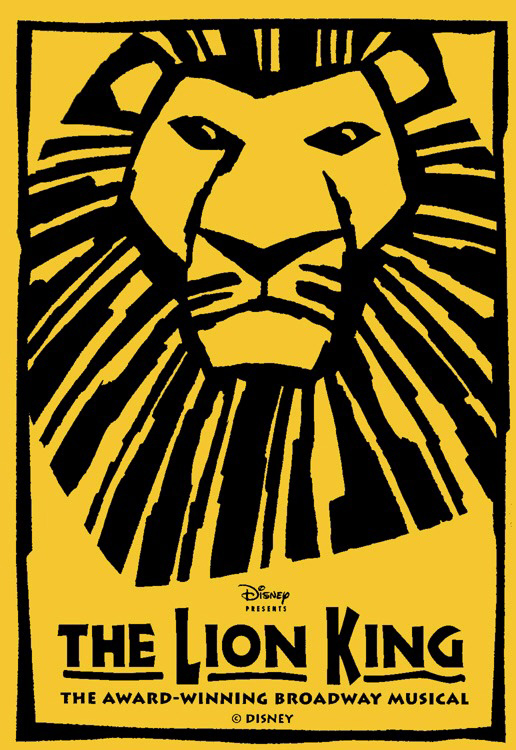
We Lion Kinged It

Thanks to the generosity of the parents, Lynnette and I took in the Lion King last night at TPAC. I'm not really a musical-play-Broadway kind of guy, so I was expecting the movie just to be played out on stage. I had heard rave reviews, but I was really just hoping I wouldn't be bored.

The first number – no, the first note (sung by Rafiki) – had me captivated. The entrance sequence, when the animals parade down the aisles and assemble en masse on stage is worth the price of admission. I could have watched the first 10 minutes for hours on end.

The color of the costumes, the talent of the actors and the visual appeal of the set made me more that simply 'not bored.' I was impressed, and even remarked to Lynnette this morning that we should go see it again tonight.

There are a LOT of songs, however. Yes, I know it's a musical and that's what they do in musicals, but most of the new tunes aren't of the same caliber as the cartoon soundtrack. As such, the only part that really drags is the beginning of the second act (which is true of the other musicals I''ve seen – both of them). But soon enough, things pick up and we all know how the story ends.

I'm not necessarily won over by the simple novelty that is the musical, but I'm a bit more willing to catch a show when we head to NYC for the Thanksgiving holiday.

Take your friends and family to this one.
Thursday, November 09, 2006 2 comments

Buy This Book: Good to Great

Released in 2001, I'd been recommended Good to Great on several occasions by different people or varying reasons. So, I figured it would be a good read and able to address a broad range of topics.

The approach: with a dedicated research team and years of work, Jim Collins and crew find companies that went from being good operations to being great operations. By doing so, these organizations were able to financially outperform their industries and the market as a whole. Quite impressive.

Collins systematizes what allowed these companies to transition so well. Kroger was crawling along, neck and neck with A&P, and then all of a sudden, BAM! It flew off the charts and today none of us head to the A&P for our groceries. Kroger, like others, (Circuit City, Walgreens, Wells Fargo, Gillette, and more) had great leadership, the right people on the right team, a clear identity and mission, leveraged technology well, and became a company that was built to last.

The book is not so much a how-to manual, because several ideas and businesses will just never make it. But, with common threads identified, there are some ideas on how to improve certain areas within your organization. This is why I recommended buying this book (as opposed to borrowing it) – you can pick it up when the need arises so that inspiration may come by looking to industry benchmarks.

The key point for me of the entire book is Collins' hedgehog concept. Using three interlocking circles (like a Venn diagram), Collins encourages readers to find that point at which the following meet:
  1. What you can be the best in the world at
  2. What drives your economic engine
  3. What you are deeply passionate about
Where these answers intersect is what you need to hone in on, as several great companies have realized. I feel that this intersection is also applicable to your personal life and work. Answer these questions and find the matching job, and should be fulfilled in what you do for money.

I am. This is why the last words of the book resonate so deeply with me:
So, the question of Why greatness? is almost a nonsense question. If you're engaged in work that you love and care about, for whatever reason, then the question needs no answer.

Perhaps your quest to be part of building something great will not fall in your business life. But find it somewhere. If not in corporate life, then perhaps in making your church great. In not there, the perhaps a nonprofit, or a community organization, or a class you teach. Get involved in something that you care so much about that you want to make it the greatest it can possibly be, not because of what you will get, but just because it can be done.

When all these pieces come together, not only does your work move toward greatness, but so does your life. For, in the end, it is impossible to have a great life unless it is a meaningful life. And it is very difficult to have a meaningful life without meaningful work. Perhaps, then, you might gain that rare tranquility that comes from knowing that you've had a hand in creating something of intrinsic excellence that makes a contribution. Indeed, you might even gain that deepest of all satisfaction: knowing that your short time here on this earth has been well spent, and that it mattered.
Many thanks to Gavin, who loaned me the book. Now I just need to follow my own advice and go buy it.
Wednesday, November 08, 2006 1 comments

The Problem with Our Democracy

I know that we think we're doing what the founding fathers wanted. We think we're running things based on the Constitution written so long ago.

But let's step back for a minute.

The last two presidential elections have shown one thing: this nation is deeply divided. And, last night, many of the nationally watched elections also were won by narrow margins (with many more awaiting recounts and appeals). So what does this mean for the state of our representative democracy?

When the electoral system was designed and the notion of a bicameral legislature conceived, our country was vastly different. Only white male landowners could vote. There were only 4 million or so people. The chains of English oppression had just been thrown off (and there would still be another battle to cement our freedom). Political parties were nothing like we see today. The whole thing was a big experiment.

Over time, the landscape of our country has changed. Diversity of race, ethnicity, economy and thought have made the notion of one person representing a lot of the population nearly impossible. As I have commented before, our election system is really a choice between the lesser of two evils. Rarely are we given 'choice' as if we were selecting a cereal at the grocery store. As a result, people stay home and for the next four years, we all participate in the national pastime of complaining.

In the voting booth, I'm given a very limited choice. Campaign ads and debates show me two platforms and ask me the question: which person's agenda do you agree with the most? This is a convoluted way to look at the notion of a representative government.

Idealistically, a representative would represent the views of a group of people. I know he won the election, but Bob Corker or George Bush does not represent my views. I may agree with some of their ideas, but I’m willing to bet that they rarely represent the complete views of an individual. Even tried and true party-liners will deviate from an issue or two. Even Jim Cooper and Phil Bredesen, who won their respective elections handily, do not completely represent my views.

What if we looked at the notion of representation in a different manner? What if we all got equal representation in government and those who voted for Ford got their views represented 48% of the time and those who voted for Corker got theirs represented 51% of the time? And those who identify with alternative agendas and therefore voted third- or other-party get represented 1%? In other words, what if every voice could be heard in Washington?

While redesigning our governmental framework is a task not easily accomplished, what if candidates stated their values but committed to honestly and truly represent all of their constituents and not just half of them? What if there were a candidate who said, "Here's what I believe is right. There are some things that I won't waver from. But, there are other issues that are important to you, the voter who lives in the area I'm paid to represent. So, tell me what you want and what you need and what will benefit the people in this area. Let's work together on making that happen."

Maybe this is what I'll be for Halloween next year: an honest and idealistic politician.
Wednesday, November 08, 2006 2 comments

Retrospectively Prophetic

In the chapter on technological advances in Good to Great, Jim Collins writes:
Consider the United States debacle in ___________. The US had the most technologically advanced fighting force the world has ever known. Super jet fighters. Helicopter gunships. Advanced weapons. Computers. Sophisticated communications. Miles of high-tech border sensors. Indeed, the reliance on technological created a false sense of invulnerability. The Americans lacked not technology, but a simple and coherent concept for the war, on which to attach that technology. It lurched back and forth across a variety of ineffective strategies, never getting the upper hand.

Meanwhile, the technologically inferior ____________ forces adhered to a simple, coherent concept: a guerilla war of attrition, aimed at methodically wearing down public support for the war at home. What little technology the ____________ did employ linked directly to that simple concept. And in the end, as you know, the United States - despite all its technological sophistication - did not succeed in ____________. If you ever find yourself thinking that technology alone holds the key to success, then think again of ____________.
Collins fills in these blanks with the word Vietnam. I think another country could also work.
Tuesday, November 07, 2006 0 comments

I Watched a Movie: The Constant Gardener

Lynnette and I watched The Constant Gardener this past weekend. I had heard it was a good flick, so we made the 2 hour and 9 minute commitment and watched it.

I enjoyed the cinematography. Great angles and shots. The color was also vibrant, as was the African backdrop. It was a pleasing movie to look at, as opposed to say, Magnolia.

The movie is pieced together, revealing information to the viewer only when the main character learns it. You’re left guessing, but not in a Sixth Sense or Matchstick Men kind of way.

There is a vast, unjust conspiracy afoot, like The Firm, and people get killed trying to uncover it, like The Da Vinci Code.

So, it’s well made, it’s interesting, and has a good bit of action. Fun ride.
Tuesday, November 07, 2006 1 comments

How I Vote

As I was driving home from my racquetball drubbing by The Shiverian this morning, I saw a crowd of folks at the corner of 8th And Jefferson holding up candidate signs, hoping to get people to honk and maybe even vote for their guy.

As I was getting ready, I heard yet another political commercial.

As I left the house to head to the office, I saw a lot of yard signs and bumper stickers.

What a waste.

None of that will make me vote for you. I understand that there are a lot of age-old tactics that candidates are quick to use (mailers, phone calls, attack ads), and perhaps they need to be used in order to get a name out there so it's in people's heads. But none of that 'wins' votes. At least not for me. I don't drive around and think, "That's a fine looking yard sign. I want that guy allocating my taxes and confirming judges." Or, "Wow. Someone cared enough to put a permanent bumper sticker on their minivan. Perhaps that's the candidate who will filibuster the best or pass excellent legislation."

Let me tell you what does determine my vote: wardrobe.

Because I don't get more than the basic $10-a-month cable, I tend to watch C-SPAN when nothing else is on. And if I have to look on there one more time and see some poorly dressed fool, with a fat neck hanging over a collar that is crying for mercy and gasping for air, I'm going to throw my remote through my TV and hope it lands on the Senate floor.

I like Ford's casual blazer with no tie. That's just the thing I would wear to the Playboy Mansion or to do business with some crooks. I'm not much a fan of Corker's Sunday church suits. Too boring. No wonder he couldn't answer those 911 calls. He was too busy buying his clothes at TJ Maxx. (You gotta get there right when the truck unloads or else those deals are gone!)

So, instead of debates, I propose fashion shows. And instead of diving into a candidate's past, let me look at their closet. If you're representing me, our country, and the founding fathers, you have to look good.
Monday, November 06, 2006 0 comments

What’s the Message?

In hopes of raising awareness about the reality of genocide in the Darfur region of Sudan, Sam writes every Monday about a key issue in an attempt to stop the atrocity. Doing so may not bring about a wave of change, but it is a small ripple that represents the tide that needs turning.

With a new target, we need to make sure we have the right message. If we've got the right people, but are telling the wrong thing, then we're as ineffective as having the right words and the wrong ears.

Taking a page out of Gerry Mackie's playbook will help us design our appeal to the Janjaweed. In his article from 2000 titled "Female Genital Cutting: The Beginning of the End," Mackie details an approach used by Tostan to eradicate the practice of female cutting in Senegal in the 1990's. The approach also helped to end foot binding in much of China.

In both cultures, the abusive practice had been linked to deeply held cultural beliefs and a economic viability. With two seemingly insurmountable obstacles, how were Westerners able to convince locals to end a practice that was hundreds of years old?

A three-pronged approach of education, discussion and commitment helped end the abuse and show an alternative way for those cutting and those victimized.

Because cutting is directly linked to marriageability in many cultures, a village would have to make a written commitment to not cut their daughters and to encourage their sons to marry uncut women. Once this happened for as little a generation, the tide had turned and the method spread to other villages.

Similarly, for Darfur, a three-pronged approach is needed to convince soldiers that what they are doing is wrong. Once education of the Janjaweed happens (largely by appeal to commonality, which is next week's entry), then a small group can join together to put down their guns and pick up the proverbial olive branch of peace.

The commitment that needs to be made is one of peace out of the necessity for survival and the education campaign can be languaged and launched similar to the one used in Senegal. Next week, I'll discuss the appeal (method) that is to be used with the soldiers in order to elicit buy-in. This appeal will be based on a shared humanity that is just below the surface of all human conflict.

On Monday, December 4, this entry will be a rather lengthy paper, which is the culmination of one of my classes for the semester. The previous three Darfur entries have laid the basic groundwork, which will be detailed in my paper. At the end, I hope to present a viable and workable solution to ending the genocide in Darfur.
Monday, November 06, 2006 2 comments

This Week's Assignment: When God Acts Immorally

I'll be tackling the following by Thursday. Feel free to chime in:
If God is good and if God is all-powerful (as conventional Christian theology insists) then why does God allow the total demise of a righteous man like Job? Or why does God reject Cain's offering? Or why does God permit the Canaanites to be slaughtered?

Answer these questions from the perspective of someone trained in 1) the Deuteronomic school, 2) the priestly school, and 3) the wisdom school. Note the prophets' own unique way of rationalizing suffering and God's seeming unpredictability. Which of these, if any, corresponds to your own modern understanding of God and the problem of suffering?

Choose two of the following calamities to discuss what kinds of divine comfort, if any, does the Hebrew Bible offer to victims of 1) slavery, 2) racial genocide, 3) forced dislocation from homeland, 4) sexual abuses, 5) terminal illness, or 6) death of a loved one?
Monday, November 06, 2006 4 comments

Come Out, Come Out, Wherever You Are!

I've refrained as long as I could from writing about Ted Haggard and the allegations and admissions of his sexual exploits. The sins of public figures gain national attention only because lots of their normal activities do. And we fuel the outing of these people as we buy celebrity gossip magazines and blog like crazy when someone gets arrested, has an affair, or gets massages.

Maybe it's because we secretly crave the spotlight, but also know deep down we're glad we'll never get it because we, too, could fall hard like Haggard. Or Hugh Grant. Or Jude Law. Or Martha Stewart. Or Winona Rider. The simple fact that I don't have to include offenses with these names attests to our national infatuation with the missteps of those in the spotlight.

Lots of people have written very smart things about the situation, calling for prayers and grace for Haggard and his family. An article in Ethics Daily has made me like Haggard more than after I saw Jesus Camp. Haggard criticized the abrasive nature of Falwell's crusades and also fought for environmental and human rights causes.

Reality is now different for the Haggard family. The normalcy they enjoyed day in and day out (albeit a different normalcy that most of us know) has been ripped from their lives because of the sins of a father and husband. There is no more 'normal' for them. Reality has now been redefined, and this is Day 5 of a new life. They will now try to step forward with these past actions forever hanging over their family dynamics. The fact that Haggard is now unemployed is an issue so distant that they would gladly trade whatever money Haggard made for life before last Wednesday.

My prayers for Ted and his family center on this situation. I can only pray that this hell of a situation can offer healing one day, resulting in a stronger, more open, and more loving family. Haggard's friends are undoubtedly few, with the White House and other evangelical leaders denouncing his behavior and their association with him.

My other prayer is for Haggard to embrace who he is. As many have said, the life Haggard was paid to live as a spokesman for conservative evangelical Christianity is not who he is. And while his confessions thus far have decried what he has done as sin and detailed his struggle to repress 'evil desires,' I pray that Ted can awaken to who God created him to be. My hope is that other men and women around the world will shed their oppressive religion and breathe deeply their identity. There is a lot of soul searching to be done on the part of a lot of people.

My hope is that Haggard would rise again to one day lead the yet-to-be-created "National Association of Homosexual Evangelicals." There are no doubt countless folks illicitly satisfying the deepest desires of their hearts, trapped in a closet they can never leave for fear or losing their sense of normalcy. As such, their true self will live years on end as a secret and a sham. The evil in their actions is not that they love people of the same gender. Their illicitness lies in the fact they are lying to everyone they know.

I dream of an inclusive Christianity. Not one that doesn't stand for anything with at "whatever" mentality. But, as I read the gospels, I see that Jesus erred on the side of inclusion. It was better to let people in than to keep them out. I dream of a Christianity that allows people to be themselves in the deepest and most honest sense, loving them for being every bit of themselves as the Creator fashioned. Perhaps Haggard is just the man to lead this movement.
Sunday, November 05, 2006 1 comments

Don't Buy This Book: The Revolution

The book looked cool, had a good title, and seemed to be about subject matter I'm interested in. So, after sitting on my Amazon Wish List for a few months, I finally lumped it in with a purchase of some sheets or a shirt or something to get free shipping.

Relevant does well at packaging books. I'm more or less their target audience in terms of demographics (young, Christian, middle-class), but not in terms of theology. Thus, it would be interesting to see how the book presented the material of some of the greatest needs in the world.

The book is divided into nice little chapters ranging from topics like Human Trafficking and Poverty to Clean Water and the Environment. While I'm not an expert on every area of social need, I do take the time to be well informed about a lot of them. The book presents basic facts and stats, so a lot of it I had already heard.

The spin is in motivating Christians to do more, give more and pray more. Each chapter has action steps such as donate, activate, advocate, educate, and pray. I'm most critical of how these steps were fleshed out in each chapter, mainly because I'm making a living at showing people how to make a difference. Thus, when the 'Donate' sidebar in each chapter simply says, "Find a organization that works in this area and give them money," it seems like a lazy way to fill white space. If you don't recommend some organizations and show me what my specific amount will do, then you really haven't helped me.

I was tempted to put the book down when I read the chapter on women's rights. Although the need for gender equity in many parts of the world was highlighted, this was also an anti-abortion chapter. I felt duped. I was tricked into reading about the need for health care in developing countries and then preached at how abortion needs to be outlawed in the US. It was also ironic that the need for gender equity in the evangelical church was ignored.

So, don't buy the book. It's cheap (less than $10), but not worth your time. If you want a free copy, let me know.
Sunday, November 05, 2006 0 comments

CoolPeopleCare Weekly Roundup (10/30-11/3)

*Monday, October 30:* Make It Count

> What if your life was 1/10,000th of a second?

*Tuesday, October 31:* Trick or Meet

> Treat yourself to an introduction.

*Wednesday, November 1:* Pick Up Litter

> Sure, it’s a cliché, but it needs to be done.

*Thursday, November 2:* Personalized Mug

> The average American office worker goes through around 500 disposable cups every year.

*Friday, November 3:* Workplace Giving

> Make work fun by having a social impact.
Saturday, November 04, 2006 1 comments

I Don't Care What They're Selling

This is a good commercial:

Saturday, November 04, 2006 0 comments

Test Day

I took a test on Friday.

I didn't really expect a lot of tests at the grad school level, even in the courses that are foundational, meaning the classes that all of the others classes kind of build on. Thus, in my early Christian history class, I guess we have to be tested on Augustine's view of baptism because we may talk about it in some other class.

Anyway, because I see a lot of school like any other task, I find out what I need to do to make a decent grade, and then plan accordingly. I spent about a week or so studying and took the test yesterday. I think I did pretty well. We'll see in a week or so.

For me, this trip towards a master's degree is primarily one of utility. Now that CoolPeopleCare will be my main line of work for the foreseeable future, the need to have a post-graduate degree on my resume is not as great as it was before. As such, I pretty much go to class when I feel like I need to (all of the lectures are online) and make sure I write well and perform well on my tests.

Most of my classmates are not in this boat. They're at Vanderbilt Divinity looking to excel, fill their minds with knowledge, and then move on towards a Ph.D., teaching, or leading a church.

And so, it always amazes me as to how people study and stress. At 8 on Friday, I was pretty much ready. I don't say this in the boastful sense, but again, I did was I had to and was ready. I hate cramming so I avoid it at all costs. Meantime, there were folks who looked like they had been up since Wednesday and forgot where their shower was. Some people were rifling through notes and writing down definitions and dates. I was glad I was prepared enough to watch academia perform its diverse idiosyncrasies for my amusement.

I still think tests at this level are stupid. Regurgitating data in an age of Wikipedia and Google is like writing with quill and ink. I'm looking forward to next year when we get to read and weigh in with some original thoughts.

Saturday, November 04, 2006 0 comments

November Meditations

Allow me to introduce Phil Shepherd.

Phil married Lynnette and I and remains a good friend despite the physical distance that separates us. He is a skilled communicator and community builder. And now he's leading us through the month of November with some great meditations.

He writes at Drive Thru Society, and his words are meaningful and comforting. It's a great way to begin my day. I encourage you to add his blog to your bookmarks or feed reader and allow Phil to help you start (or end, or continue) your day with reminders about your spiritual needs.

His words today speak well to the current situation with Ted Haggard. A lot of people are saying a lot of things about the issue, but Phil helps Christians put it all in a correct perspective.

Go visit Phil now.
Saturday, November 04, 2006 1 comments

Weekly Recap - 10/28-11/3

How can we make our days more holy? I believe that an attempt to live deeply in community with others, to converse, encourage and be with other people, is a very holy task. Spending 8 hours in solitary prayer or Bible reading is not the best way to maximize the 'God' part of your day.
Dreams like this make me want to run for something. For a moment while being tortured with a pointless debate on Saturday night, I thought for just a minute that maybe I should throw my hat in the ring – not in this Senate race, but maybe for city council next year, or vice-president of the neighborhood association. And then, one day, when I’m the junior Senator from Tennessee, folks can say they read my blog back when – back when options were limited, when we used to drive gas-powered cars, when we used to think gay couples couldn’t marry, and when we used to pray for someone decent in DC.
Quite literally, the genocide would stop if individual soldiers stopped killing people. The genocide would stop when soldiers put down their guns and use another means for income and food other than raiding villages. The genocide would stop if individual soldiers no longer choose to do what they do.
Here's what I'll be working on this week.
Let's be honest. Does anyone base their vote in Tennessee on what Kerry says or what Foley does? The sins of each party an be levied against one another until the bullets of insult have riddled us all blind and disenchanted.
I don't know much about Maggie Dawn, but I know enough that I think you should read her blog. Again, I believe in reading blogs and books that make us think, that make us smarter and that make us think about stuff in new ways. Maggie's blog does this.
Friday, November 03, 2006 0 comments

Stepping It Up Profile #6: Maggie Dawn

Each Friday, I will profile a different religious female blogger. I would like you, my readers, to check out her site, add it to your links, favorites and bookmarks, and tell one person to do the same thing. If we are to tear down the discriminatory walls that have been built over the millennia, it will take a lot of us wielding a lot of hammers.

I don't know much about Maggie Dawn, but I know enough that I think you should read her blog. Again, I believe in reading blogs and books that make us think, that make us smarter and that make us think about stuff in new ways. Maggie's blog does this.

From her blog:
After a first career as a musician and songwriter, Maggi Dawn became a priest in the Anglican Church. She read theology at the University of Cambridge (England). Her PhD was on the form-content relationship in the written theology of S T Coleridge.

She was the Team Curate in Ely, Cambridgeshire, then Chaplain of King's College Cambridge, before moving to Robinson College Cambridge where she is now Chaplain and Fellow. Her current research interest continues the theme of the form-content relationship as it applies in liturgy and worship.
If you want to expand your mind, then keep tabs on what Maggie's writing. Browse through the October archives and you'll see what I mean.
Thursday, November 02, 2006 0 comments

Moments Like This Make Me Proud of the Tennessean

I usually loathe the Tennessean. It's often nothing more than conservative religious news filled with AP reports and little investigation. Worst of all is their opinion page, with local ranting about traffic and Titans and very little dialogue about real issues like poverty, education or the economy.

But today, they made me proud. They ran the following piece in response to the (already oversaturated) John Kerry debacle:
The sharks -— or are they Swift Boats? -— are circling.

Republicans are feverishly seizing on Sen. John Kerry's remark about President Bush's Iraq policies and trying to distort it into a slap against U.S. troops in order to sway voters in next week's elections.

The Massachusetts Democrat apologized for his statement yesterday, but he needn't have, because he said nothing to offend soldiers or veterans. In the speech to a group of California college students on Monday, Kerry said, "Education, if you make the most of it, you study hard, you do your homework and you make an effort to be smart, you can do well. And if you don't, you get stuck in Iraq."

On Wednesday, Kerry said that he erred by changing the prepared text, which said, "I can't overstress the importance of a great education. Do you know where you end up if you don't study, if you aren't smart, if you're intellectually lazy? You end up getting us stuck in a war in Iraq. Just ask President Bush."

The sad fact is, young men and women without a college degree usually earn less, as much as $23,000 a year less, according to a recent U.S. Census report. And many of those have-nots, lured into the military by enlistment bonuses, find themselves in Iraq. Then, in many cases, their tours of duty have been extended, because the U.S. military is currently overextended with troops needed on numerous fronts.

"Stuck in Iraq" says it pretty well.

Don't expect to hear that from a soldier who has experienced it, but they have little choice. The Uniform Code of Military Justice prohibits active-military officers from criticizing the president, and other young service members will feel it prudent to follow the same course. Kerry, the Vietnam War veteran and hero, knows this all too well.

His apology, coupled with cancellation of campaign appearances on Wednesday, are probably an attempt to help fellow Democrats who are locked in close races next Tuesday by distancing himself.

He would do better to ask the White House and other Republicans how they can continue to wage this senseless war at the risk of so many American lives.
Well said. Let's be honest. Does anyone base their vote in Tennessee on what Kerry says or what Foley does? The sins of each party an be levied against one another until the bullets of insult have riddled us all blind and disenchanted.

Voting is important. So choose wisely.